
Always Here, Never Alone: On Center and Circumference
I am in a book discussion group reading Cynthia Bourgeault's Eye of the Heart. Her work tends to open my heart and reorient me back to my center. There are people who have done real work purifying their own consciousness, and their whole system radiates something you can feel, not just something you can argue with. I catch myself hanging onto every word they transmit, as if I'm tasting honey. Their teaching is original to their own particular quirks, and there's no mistaking that their focus is laser-aimed at what G. I. Gurdjieff called the Real I.
Shortly after our last book gathering, I had a group coaching session where my coach reminded us of our center. My feelings went deep, and afterward my body reacted as if I were coming through the last stages of a cold: shivers, cold sweats. Something had moved through me strongly enough to register in my body before I understood it in my mind. Teilhard de Chardin has a phrase for this, quoted in the very book my group is reading: a felt paroxysm, the moment a truth stops being merely understood and is instead lived at its full intensity. My body seemed to know that before I did.
That night, I wrote this:
The center is my source, and the center is my Lord. Everything else is circumference.
My skin, his skin. My lips, his lips. The Eros running through our veins like the pomegranate split open.
I can give and receive from that center, and my heart expands in proportion to trusting his presence.
Always here. Never alone. Held. Loved. Embraced. Now.
Today, in a meditation with sixty other people, I understood its true meaning.
For the last few years, my life has been focused on wholeness, awakening, surrender, and return to Love, to God. It has become, somewhat jokingly, my full-time job, though I'm never quite taken seriously when I say that out loud.
For all my dedication, I do steer away from my center. In the beginning of this journey, I almost wanted to leave the circumference behind entirely, the human aspects of life, not life itself, but something closer to how a monk or a nun lives, separated from the daily grind. With time, I've realized the point of walking toward God was never to escape being human. It was to infuse love into our humanness, to be fully human while also being fully divine.
That means the circumference matters, but nothing else gets to become my Source. The circumference, people, relationships, work, frameworks, being seen, certainty, is always offering itself as a substitute center, and because it's tangible, it's tempting. The invisible, felt truth of the center can't compete on those terms unless I already know, in my body, that it's real.
For a long time, it felt mostly like either/or. I either had my center, or I had the periphery. I struggled to hold both at once. I'm starting to see that I can have my work, my writing, beauty, money, friendship, romance, and still not ask any of them to give me what only the center can give me. I don't have to kill desire to return to my center. I can feel the fire and remain rooted. I can move outward without relocating, without abandoning what's underneath me.
In that sense, what I'm actually longing for is freedom within the world, not freedom from it.
When I feel myself departing, this is the practice: Where is my attention right now? What has quietly become my center? Can I return?
And whenever the circumference starts to seduce my attention, I come back to this:
Always here. Never alone. Held. Loved. Embraced. Now.
We might forget the center. It does not forget us.
O Brave New World
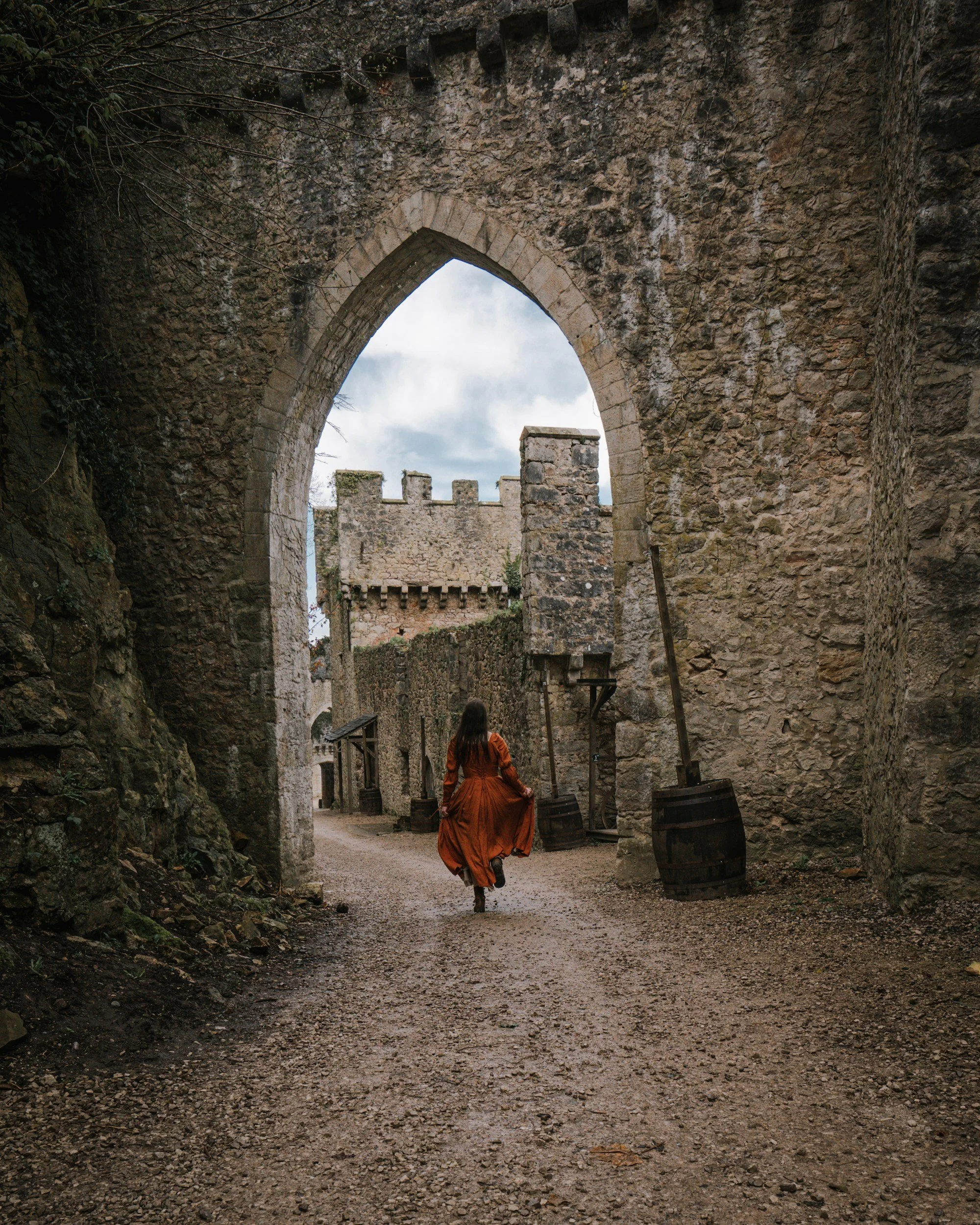
Shakespeare wrote about Prospero in the “Tempest.” Prospero was exiled to an island after his brother Antonio betrayed him and seized his dukedom of Milan. He arrived with his daughter Miranda and used his books and magical knowledge to survive and eventually gain control over the island and its spirits. The island became both his refuge and his castle of knowledge and power, but ultimately he had to relinquish that control and return to the human world.
I have been thinking about Prospero's castle lately because I recognize something of myself in the impulse to build a world of meaning around the unknown.
Being an avid reader, I often chase my curiosities through different modalities. I have gathered many languages to make the spiritual landscape more legible, and the human one more palatable.
In many ways, I have built my own castle. I do believe, the castle is necessary to make sense of it all.
We need symbols. We need stories. We need frameworks. We need maps.
The problem is not having a castle. The problem begins when we forget that it is a castle.
The castle is not merely a place of knowledge. It is a place of shelter, a structure we build between ourselves and the mystery so that we can learn how to meet what we cannot yet fully understand. Its walls can protect us while we develop the capacity to see. Eventually, what sheltered us can also become what separates us from the very life we were trying to understand.
The goal isn't simply to accumulate more knowledge. It is to find a place from which things themselves begin to radiate into intelligibility; to find the vantage point from which meaning becomes visible.
In some cases, truth has a vantage-point dimension. The person in the valley sees the mountain. The person on the other side sees the valley. The person on the ridge sees that the mountain and valley belong to one landscape. Each perspective reveals something real, but none necessarily contains the whole.
This is why Prospero's castle is such a powerful metaphor. His books, magic, and elaborate inner world are not simply false because they are constructions. They are ways of perceiving and organizing reality. The danger comes when the map becomes confused with the territory, when the symbolic system becomes more important than the living reality it was created to illuminate.
At some point, there is the danger of making the castle an escape from the real world and the tools becoming the method of controlling our reality.
Prospero didn’t discover that his magic was useless. He discovered that he cannot remain Prospero forever.
The books and magic helped him survive, understand, and exercise power, but eventually he had to release them.
There may come a point when the very tools that taught us to see must become transparent enough that we no longer need to hold them between ourselves and life.
After all the systems and symbols, there is still: the cup of coffee, the person sitting across from us, the unanswered question,
the walk, the conversation, the grief, the unexpected invitation, the ordinary afternoon.
The world itself. We don't need to interpret every cloud.
Miranda was Prospero’s daughter, and while he has immense knowledge, Miranda encounters the world with wonder, “O brave new world.”
The final movement is from knowledge back into wonder. This is what it means to leave Prospero's castle. It is not to become less conscious, but to become transparent enough to consciousness that the world no longer needs to be explained before it can be loved.
The castle taught me how to look. Now I want to see, just like Takao Tanabe does when he paints.
Tanabe teaches attention to the ordinary landscape; Prospero teaches the danger and necessity of the inner landscape. One looks outward with extraordinary precision; the other learns when to relinquish the instruments through which he has looked.
That is what the eye of the heart allows, a way of perceiving, contemplatives have long taught, that is neither purely intellectual nor purely emotional, but a kind of seeing that holds both at once: not escape from our constructions, but the ability to hold them lightly enough that they become windows rather than walls.
Shakespeare doesn't leave Prospero simply walking away in triumph. At the very end, after renouncing his magic and preparing to return to Milan, Prospero turns to the audience and asks for their applause to set him free. That is the last lesson of the castle: we cannot always dismantle it by force. Sometimes we can only recognize that we are ready to be released from what once protected us.
I recognize this in my own life. I have spent years building languages, frameworks, ways of naming things so they become bearable. The castle was never vanity. It was survival, and later, it became service, but I have started to notice something more specific. When real pain hits, I do feel it, unmediated, for a moment. Then, almost immediately, I reach for words, for cards, for answers. Not because the feeling is finished, but because staying inside it, without yet knowing what it means, is harder than reaching for the meaning itself. The frameworks give me hope, and hope is not nothing. I am learning that leaving the castle, for me, might not mean giving up the frameworks at all. It might mean widening the gap, just slightly, between the hurt and the explanation, and finding out what is actually there in that space before I let myself leave it.
Miranda never built a castle. She grew up inside her father's, and when the moment came, she didn't see danger or the weight of everything he had survived. She saw only a brave new world. Maybe that is what a castle is actually for. It is not to keep us inside it, but to shelter us long enough that we can walk out the door still capable of wonder.
Some days I still reach for a book instead of a feeling, but more and more, I find myself just sitting with the coffee, the person across from me, the ordinary afternoon, without needing to explain it before I am allowed to love it.
What If Love is Not the Alpha but the Omega?
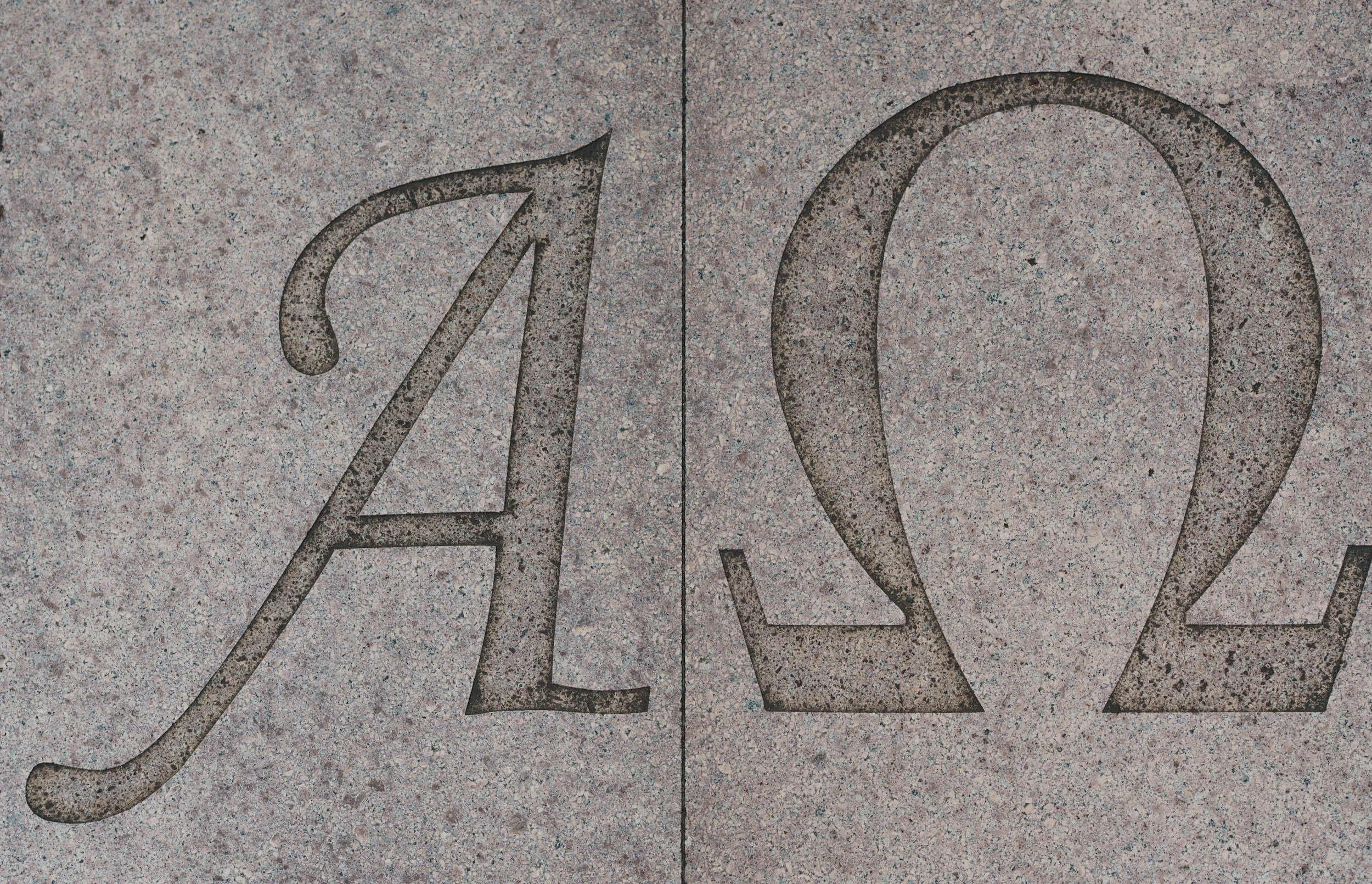
What if Love is not the Alpha but the Omega?
What do I mean by that?
I am learning that our task here is not to arrive already able to embody unconditional love, agape, but to grow into it through conscious effort and intentional suffering. I don't mean suffering we go looking for, but suffering we choose to stay with instead of run from when it arrives.
We have to master it. I believe that is our purpose here.
For me, that mastery has looked like a long, ongoing chiseling: facing my shadows, sitting with my upsets, loving myself, letting old patterns be worn down rather than protected.
Cynthia Bourgeault represented this movement with the formula:
Agape (A)= Eros (E) x Kenosis (K).
It is an alchemical process in which kenosis, the voluntary self-emptying of the self, allows the fire of eros to be surrendered back to the Source from which it came. Agape is born when the raw fire of eros passes consciously through kenosis.
Eros is the life force, energy that flows through us. It is the creative force, the impulse toward movement, connection, life, and becoming.
Eros is not the fire to be overcome. It is the fire that must be transformed.
To transform eros doesn't mean to shrink it, suppress it, or wait for it to burn out. The fire itself was never the problem. What it asks of us is different: to let the intensity of wanting become the very material that gets refined, rather than either acted out unconsciously or shut down out of fear.
Desire isn't something to survive. It's something to let work on us, until what began as grasping becomes something we can finally offer rather than only crave.
The difference is felt, not just believed.
Craving grips an outcome so tightly that losing it feels like losing yourself. Offering carries the same intensity, but does not depend on possession. It allows us to want fully while remaining whole whether or not the desire is fulfilled.
This isn't only true at the level of personal desire. It's true, I think, at the level of creation itself. The common myth is that the world was broken by humanity through the Fall or Original Sin, and suffering is our punishment. What if suffering, or at least friction, was not an intrusion into creation? What if it was part of the original structure through which consciousness comes into being?
Perhaps, as many have proposed, creation begins with God’s desire to know Godself, but with differentiation comes tension: the friction between what was and what might be, between desire and fulfillment. In that space of tension, something new can emerge. A third, reconciling force arises, and from this movement, sentience is born.
There is a cost to the arising of something out of nothing.
Agape is a product of the soul, and the soul is forged in fire. Unconscious habit leads to entropy and breakdown. Conscious participation restores the exchange between us and Source.
I think of soul as the product of three forces, not two, and not one gift bestowed at the start. This follows Gurdjieff's Law of Three: nothing new arises from only two forces in opposition; it takes an affirming force, a denying force, and a reconciling force to produce a genuine fourth.
Source is the affirming force: the shared, undivided origin every life descends from, the raw creative fire Bourgeault calls eros.
Ordeal is the denying force that fire inevitably meets. It is not simply hardship coming from outside us, but the self-referential hunger to grasp and possess what we desire, the ego closing around its object rather than remaining open. Left alone, these two forces lock against each other, fire consuming itself, Source flattened into mere appetite.
What makes a soul is the third force: Union, the reconciling movement, akin to what Bourgeault calls kenosis, the voluntary surrender of that fire back to the Source from which it came.
Love isn't one of these three forces at all.
Love is the Omega.
It is what becomes possible only once the other three have done their real work.
It cannot be handed to us fully formed at the beginning. Only Source can be given like that. Love has to be forged, the same way the soul is forged, out of the friction between raw desire and its tendency to grasp, transformed through surrender rather than avoided.
This is not to say we arrive empty. Source is given to every life freely, the spark itself is never earned. What has to be forged is what that spark becomes: whether it matures into a love that can offer, or stays circling, unrefined, around its own hunger.
This is why agape is mastered, never simply given.
This process reminds me of a story I read in Mitch Albom’s book Have a Little Faith. When Mitch asks the Rabbi, the Reb, “What makes a man happy?”, the Reb is reminded of something the sages have taught. It is that when a baby is born, its hands are clenched because a baby wants everything of the world, but when an old person dies, their hands are open because they have learned the lesson of surrender.
This is the whole arc in miniature: the clenched fist of Eros at the start, and the slow, costly work of opening it, one ordeal at a time, until what is held is no longer grasped but given.
Agape, like the open hand, is not how we arrive. It's how, if we're willing to be worked on, we learn to live open-handed, and eventually, to leave that way too.

A Hundred Years of Paying Attention
I saw Takao Tanabe 100: Inside Passage at the Audain Art Museum in Whistler last week, and I have not stopped thinking about the exhibition since. It marks Tanabe’s hundredth birthday, and it includes sixty-some paintings from six decades of his work.
Walking through the rooms felt less like witnessing an art show and more like watching one artist’s eye get sharper and sharper across a lifetime of creating. What struck me most wasn’t the subject of his paintings but how he painted them.
When I arrived, I knew nothing about him, but I quickly recognized that Tanabe didn’t land at these landscapes by accident. What I subsequently learned is that he spent his first two decades as an artist restlessly moving through different styles, as if testing which language could hold the message he wanted to transmit: loose abstraction first, then, bored with it by his own admission, hard-edge geometric abstracts. Afterwards, he spent a year in Japan studying sumi-e and calligraphy, a training that seemed to affect his craft substantially. He came back with what has been described as a “one-shot” method for his large-scale acrylic canvases, planting down color and form with a confidence that doesn’t leave room for correction. You can feel that discipline in the finished creations: nothing feels wasted or fussed over. Every brushstroke seems to have known exactly where it needed to land.
What that training produced, once he turned it toward landscape, is a kind of precision that leaves you speechless. Critics keep returning to the horizon line in his work, the place where sky meets water or water meets shore, and how exactly, how almost fanatically, he demonstrates that boundary. Stand close to one of his coastal paintings and you notice how much information is packed into what first reads as a wash of grey. He has said himself that he is drawn to the grey mists and rain-obscured islands, the weather that offers just enough detail to hold your interest without spelling everything out. That restraint is its own kind of victory. It takes real control to make emptiness feel full.
Once I stepped into Tanabe’s life history, I recognized the origin of that precision. He was born in 1926 in Seal Cove, a small fishing village near Prince Rupert, the son of a commercial fisherman, and he spent his childhood around water long before he painted it. In 1942, at the age of fifteen, his family was forcibly removed from the coast along with roughly 22,000 other Japanese Canadians, sent through a processing centre in Vancouver and then to an internment camp at Lemon Creek in the B.C. interior, where there was no school and no way to finish his education. He’s said that the anger from that experience stayed with him for thirty years. I began to wonder about the relationship between what had been taken from him and the way he later looked at the landscape. He had spent his childhood around water, had it taken away from him, and then spent decades returning to it through his work. I can’t know whether one had anything to do with the other, but standing there, looking at those paintings, it was difficult not to feel the connection.
What followed me out of the museum and into the rest of my week, a week I’d already spent thinking deeply about what it means to be fully present, to actually participate in my own life instead of moving through it half-attentive.
We take an enormous amount of scenery and impressions every day and retain almost none of them. We glance at a waterfall long enough to photograph it, not long enough to actually see it. Tanabe’s Inside Passage paintings are what happens when someone refuses to do that. To paint water with that kind of photographic accuracy, you can’t be thinking about the next thing. You are fully alive, fully present, fully participating, watching the specific way the light falls on this particular morning, aware that it will never look exactly this way again. That’s clearly not just a technical skill. It is devotion to presence. Every canvas I saw was a testimonial to his presence in the creative space, for however many hours it took, completely there. To look that carefully at something is to give it your attention, and attention may be one of the most intimate things we can give.
When something has been taken from you once, maybe you stop taking anything for granted. You look at things like they might not be there tomorrow, because you know, firsthand, that it might not be. I wonder how to cultivate this type of presence without loss having to teach it to me first.
What moved me while standing in the gallery was watching someone spend a hundred years getting more and more precise about how to translate his feelings into landscapes. That kind of precision doesn’t happen by accident, and it doesn’t happen quickly. It is the result of decades of showing up, looking intently, and refusing to let the work be anything less than true to what he actually observed.
I left thinking less about art and more about my own week, my own unremarkable Tuesdays, and how rarely I give them the kind of attention Tanabe gave a single stretch of coastline. We are so accustomed to waiting for something important to happen that we can miss the strange fact that our lives are mostly made of things that don’t announce themselves as important: a Tuesday morning with a cup of coffee and a conversation we’ve had a hundred times and light coming through the window in a particular way that will never quite happen again.
This is what I mean when I say I want to participate more. It is not about becoming more productive, more mindful, or better at being present. It is simply about no longer treating the ordinary parts of my life as if they are less worthy of my attention.
To actually be in the moments I am in, instead of already halfway to the next one.
Tanabe spent decades refining his ability to see. I am pondering whether we can spend our lives refining our ability to live.
This is another kind of precision: setting aside the imagined life, the anticipated life, the life we're waiting to begin, and finally seeing the one we're actually in. This Tuesday. This particular light. This particular person sitting across from us. This particular moment that will never come again. It made me want to court my own life, the way you’d court a long-lost lover.

Ordinary Fire
We are taught, almost from the beginning, to prove our uniqueness. To find what sets us apart: the talent, the hurt, the vocation, the style, that makes us undeniably ourselves. There is real fear that lives underneath this effort, a quiet unease that if we are not different enough, we might not be necessary at all.
If we look up on a clear night, we will see that no two stars in a constellation are the same. Some are ancient, some young, some burn close, and some impossibly far. Some glow bright enough to name and others are barely a whisper of light, visible only if you know exactly where to look. Yet none of them are trying to outshine the others. None of them are anxious about their particular brightness, distance, or age. Each one is simply burning, exactly as it is, exactly where it is.
It's only because of their differences, not despite them, that the shape becomes visible at all. If every star burned identically, we would see a formless glow, but no Orion, nor Bear. There would be no shape for a sailor to steer by, nor shapes for two lovers to sit underneath and trace with their fingers.
All my life I have been reaching to be unique and distinguish myself from others. Whenever someone called me different, I took deep pride in it. So, I worked very hard to comprehend and strengthen my uniqueness. My value came from how different I was from everyone else. By moving to a foreign country, that mission proved to come easy—I spoke with an accent, knew a couple of obscure languages, dressed with a European flair, and had one-of-a-kind cultural experiences.
Carl Jung called this individuation, the long, often lonely process of becoming distinctly, irreplaceably oneself. He was right that it requires real separation. A person cannot become whole by simply merging with whatever the family, the culture, the crowd expects, but Jung never said separation was the destination. The self, fully individuated, does not stay apart from the whole. It becomes capable of real relationship with it.
Gurdjieff, working in an entirely different tradition, arrived at something remarkably similar. He taught that most of human life is a kind of sleep, driven by conditioning, habit, and identification rather than genuine choice. Waking up requires a real separation too, learning to observe the self rather than simply being run by it. This separation was never meant to be a permanent address. It exists so that a person can eventually return to life, to relationship, to the whole, not merged unconsciously, and not defended, but present.
I think this is where my own desperate wish to be different has quietly hidden for years. Looked at closely, it is sometimes just one more form of sleep, one more identity to disappear inside. The fear of having no significance, no unrepeatable shine, is real. The separation it demands was only ever supposed to be the first movement, not the whole song.
The star does not stop at I am uniquely distant, uniquely bright, uniquely old. That is only the beginning of the work. The deeper movement, the one both traditions point toward, is the moment the differentiated star becomes visible as part of a shape it never actually stopped belonging to, even while burning entirely as itself.
There is a moment, fleeting and easy to miss, when looking up at a scattered field of stars, when the eye stops seeing separate points of light. Nothing about the stars themselves has changed. They are still burning at their own separate distances, their own separate ages, entirely unaware of one another, and yet, for the one looking up, many becomes one.
When I dare to look deeply enough, I sometimes come upon something beneath distinction—a unified center where separation no longer feels absolute. I think that moment of unity is God. Life is a paradox, and this is one reason I love Gurdjieff's Law of Three. We are both distinct and connected, separate and one. When those seemingly opposing truths meet in relationship, something third can emerge—something neither could produce alone. We are distinct units becoming something neither could be alone but only through true relationship.
Maybe this is happening constantly, not only in the sky, but at our own table, in a room full of people speaking different truths in the same evening, in a family with its wounds and its love intertwined so tightly neither can be pulled free without the other, in every constellation of people who never chose each other and yet somehow made a shape. Each of us burning our own distance, our own fire, our own particular unrepeatable light, and every so often, if we are patient enough to look up, or to look around the table, the many becomes visible as one.
It is the moment separate fires are suddenly seen as a single sky.
Maybe freedom is not found in being the brightest or the rarest point of light. Maybe it is simply found in burning as what we actually are, trusting that the shape we're part of was never going to be visible without us exactly as we are, ordinary distance and ordinary fire included.
Dormant, Not Disappeared
Do we only have value when we directly contribute to something or someone? Does our value diminish if we are not tangibly delivering anything in the moment?
I have been battling with worthiness for years. When I was in a leadership position at the university, that part of myself that needed validation and needed to earn love was mostly satisfied. Students looked up to me. Teachers depended on me. It felt like I mattered. Every time I was asked what I do, I proudly announced it because I always witnessed the respect in return.
Imagine leaving this space after a decade there and everything else crumbling- home, stability, connections, and my own worth attached to that identity.
It took me a year of consistent healing to not get upset when I encountered the subject. That part of me was raw and vulnerable. Who was I without being the creator, the educator, and the leader of that program? The summer program with international students was an especially sensitive subject for me. I poured my love and creativity into it in the years prior, and its original design was dear to my soul. Imagine my discomfort when I was quickly replaced by another instructor although the framework remained the same. I was asking about their performance, secretly hoping to affirm that I am irreplaceable.
It was painful to witness the flow of life in that space where everyone else remained but me. I quickly realized that I have to detach my reason for existence from these spaces and places. My worthiness is intrinsic and not dependent on accomplishments and accolades.
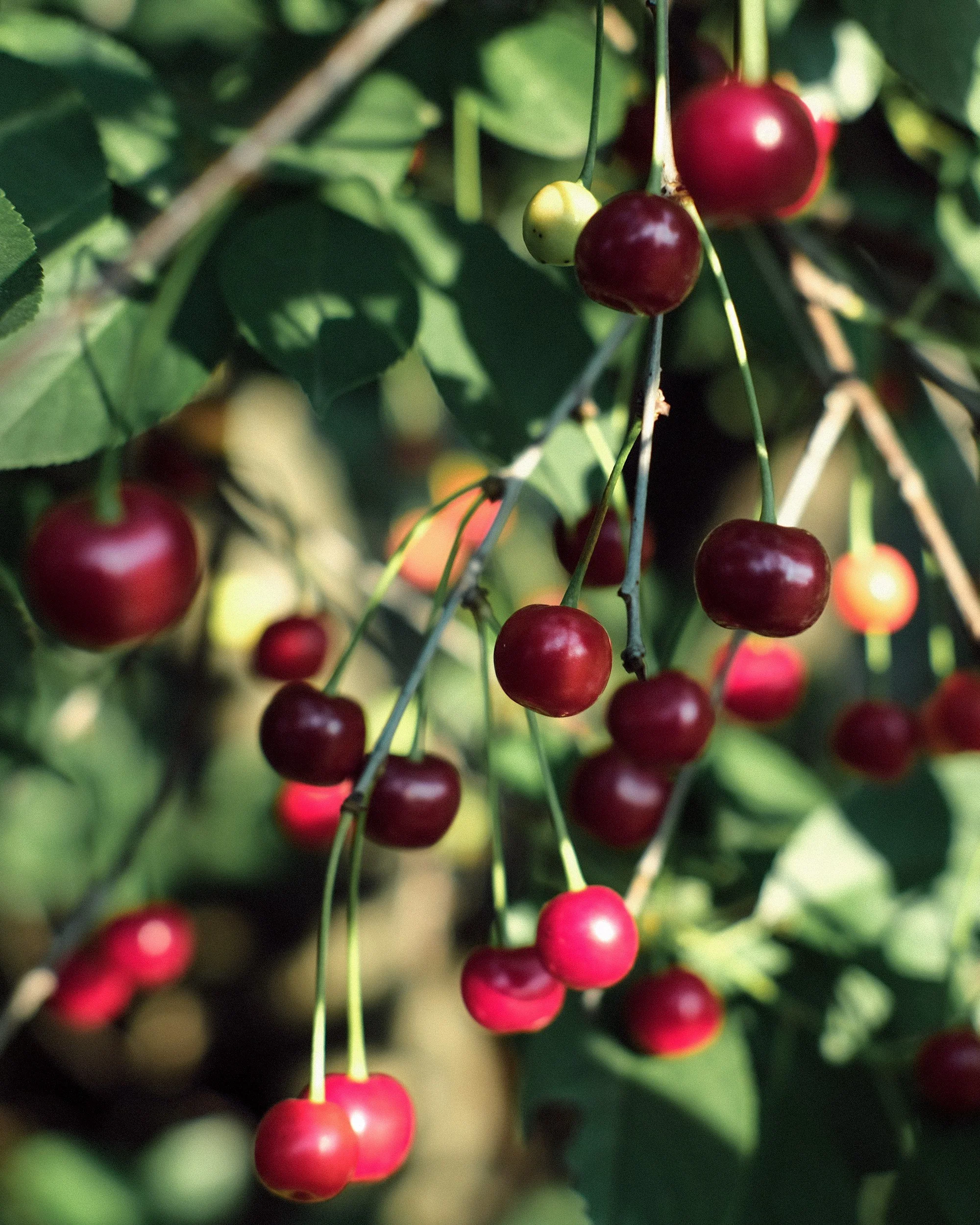
This past weekend, I walked through a forest trail and learned that the pin cherry tree, also called the fire cherry or bird cherry, drops seed pits that remain dormant and viable in the soil's seed bank for 50 to 100 years. These buried seeds wait for a major forest disturbance, like a fire or clear-cutting, to finally sprout when sunlight hits the forest floor. The hard outer pits protect the inner seed from decay and environmental damage for decades. The buried seeds only break dormancy and germinate when a disturbance opens the canopy and warms the soil.
It immediately dawned on me that the pin cherry tree has a delayed value, but it does. No one acknowledges it for these 50 to 100 years, but it continues with its mission to be potentially needed in some years ahead.
We humans struggle with that notion. We desire to be seen, heard, and recognized day in and day out. We feed on that recognition instead of quietly carrying our gift into the world of earthly matters. What would it take for our existence not to depend on what we produce and deliver in this lifetime? Each of us carries something that does not need to be immediately useful in order to be meaningful. Unfortunately, our culture rewards tangible and immediate results. The ones whose effects ripple into the future are often overlooked and neglected.
Vincent van Gogh sold only one painting during his lifetime, for the equivalent of roughly $109. He produced over 2,000 works in just over a decade, and popular recognition of his work only began around 1910, twenty years after his death. Emily Dickinson published fewer than a dozen poems during her life, and those were heavily edited. Today she's regarded as a poetic genius with nearly 1,800 poems to her name. Melville, Bach, Nick Drake, Vivian Maier, each made work of real, undeniable value while the world simply wasn't ready to see it yet.
That is why the pin cherry stopped me with fascination. I recognized something in it. There have been seasons of my own life when I have felt unseen, unneeded, uncertain whether what I carried still had any value, but dormancy is not the same as disappearance. Being unseen is not the same as being without purpose.
When the workshop has no registrations and the email goes unanswered, and when I find myself doubting that what I'm building matters, I am trying to remember the pin cherry. Some things are not meant to bloom on demand. Some gifts need to remain quietly alive beneath the surface until the conditions change.
Their value was never in question. Only the timing.
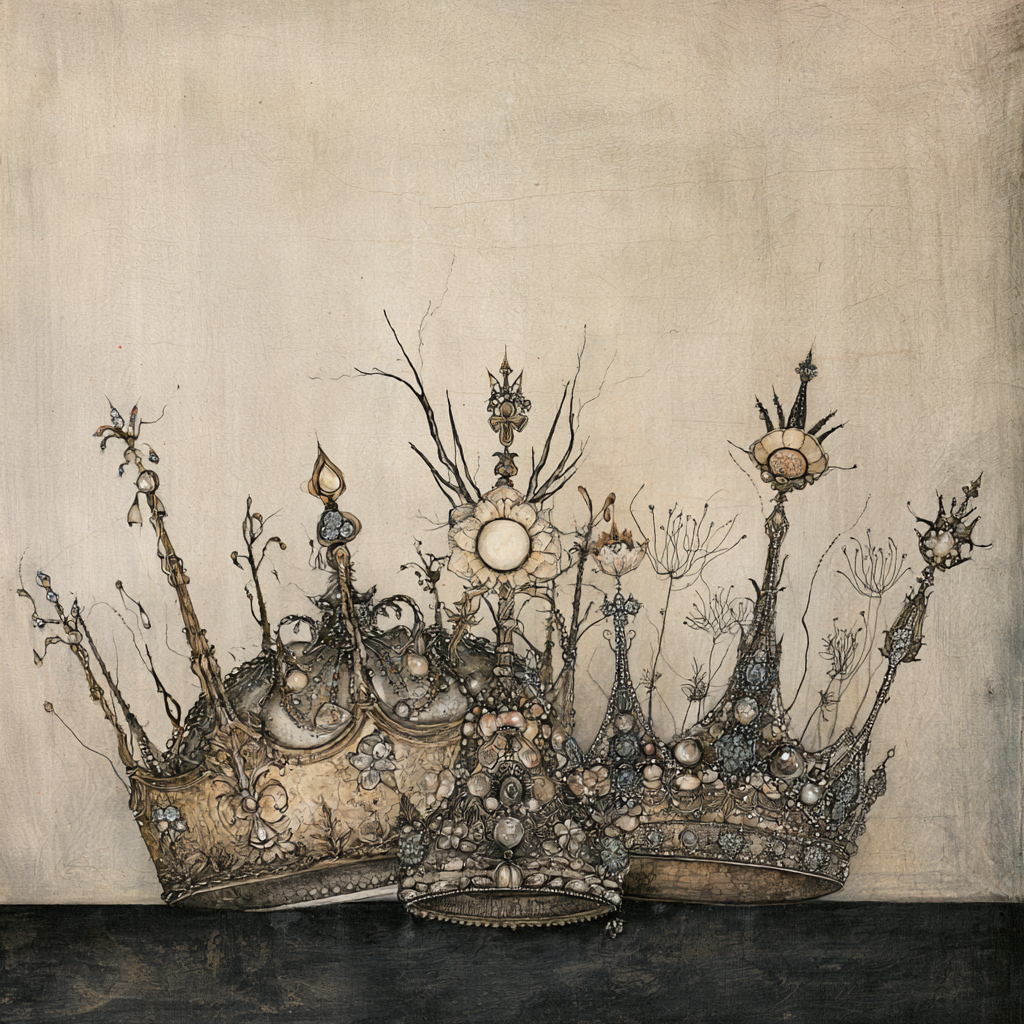
More Than One Crown
There is a particular kind of vertigo that comes from being in transition on two levels at once, your own life reorganizing itself while the wider world does the same. Old institutions are dissolving or being questioned. Old categories of work, relationship, belonging, are loosening everywhere, and in the middle of that double unraveling, there is real pressure, from within and without, to arrive at the other side already legible and nameable. Already something you can say in thirty seconds at a dinner party without anyone’s eyes glazing over.
I have been living inside that pressure for months now. Describing who I am becoming without collapsing the new version of myself into some structural framework feels, most days, genuinely daunting. The traditional roles I have occupied were specific, and useful, and I understood exactly how to explain them: teacher, manager, director. Each one came with its own thirty-second answer, ready-made, low-risk, immediately understood.
The space I am stepping into now has no such answer. It is expansive, and multifaceted, and every time I try to compress it into a single sentence, something essential gets left outside the frame.
What usually happens next is predictable. I reach backward, toward the old paradigm. I reach for something that sounds enough like a title that people can accept and understand without judgment. Of course, I recognize these reaches for what they are: assumptions, defense mechanisms, years of practiced strategy. It is years of learning to fit, to belong, to be accepted and loved. Years of earning love, rather than honorably taking the space I already belong in.
Lately, every time I naturally fall into situations when I am being asked to explain what my new role is, as much as I have started to resist the title Therapeutic Coach or Spiritual Coach, I land back there because it has some weight and explainability. When asked to elaborate, I stumble. Not because I don’t have a clue about what I am doing, but because I feel I need to fit into a familiar framework in order to be accepted. Last night, while sitting by the fire with some women I just met, I found myself describing one of the approaches I draw from to summarize my venture instead of more broadly stepping into my multitudes and embodying them boldly. It feels safer to wrap myself into a cocoon of someone else’s discoveries and well-practiced approaches than to spread my wings into my new identity which is much larger than any single title, modality, or theory.
The Queen of Wands steps in when I enter the territory of embodying myself. She begins with, “I am here.” She radiates rather than reaches. She tends the fire which generates from within. She is deeply embodied and present in her life. She enjoys beauty, creativity, hospitality, conversations, gardens, color. She reminds us that beauty is one way life becomes visible. She can fully inhabit herself without the need of justifications. She tends the fire and those who are cold are invited to come closer, but she doesn’t persuade them.
Part of me expresses through writing, a part wants to theorize, another part wants to teach and guide, and yet another one to create transformative containers…and to force myself into a single role, to decide to describe myself with just one title, would eliminate large parts of me that matter.
Many of us have learned to believe that a single title is easier to trust than a living, evolving identity. The world wants to shove us into what it considers the appropriate pigeon-hole, but many of us feel uncomfortable being shut in, labelled, the key turned, so that we are not able to evolve as all the multitudes we contain. Our deepest longing is to be free.
Francis Bacon writes in De Augmentis, “If we begin with certainties, we will end in doubt. But if we begin with doubts and bear them patiently, we may end in certainty.”
So instead of labeling myself, I have been exploring a variety of metaphors that come closer to how I desire to serve others. One is the Muse, “let me open a door, and if you feel enchanted, see what resonates and inspires you.” Another one is the bridge, “I simply exist. I cannot carry you, but I can help you cross from one side to the other.” The Weaver is present too, weaving stories, symbols, places, ideas, traditions, and experiences. The Hierophant as the translator between two worlds- the ordinary and the sacred; the seen and the unseen; the mysterious and the human. And Vesta, the keeper of the fire.
Even as I write this list, Muse, Bridge, Weaver, Hierophant, Vesta, I notice what I am still doing. I am still reaching for language sturdy enough to be believed. I am still offering a small collection of borrowed crowns instead of simply standing in the room without one.
Maybe the real work is not finding the right metaphor but not needing one at all.
The Queen of Wands does not introduce herself with five names before she is trusted. She simply says, I am here, and tends her fire, and lets whoever is cold decide, on their own, whether to come closer. She does not perform her multitudes to earn her place beside the flame. She is already the flame.
Maybe that is the actual invitation underneath all of this. It is not a better title, nor a truer metaphor. Just the willingness to sit by my own fire, radiating instead of reaching, and trust that what I contain does not require translation to be real.
I am here.
The First Yes
I have been not so gently moving through the theme of belonging. And not so much about belonging to the other, community, and the Cosmos but belonging within myself. Walking into my own inner home and feeling welcomed, received, and cared for. Here is what I discovered: I had been relying on external belonging to charge me with life force. What happens when that charge is repeatedly denied? When life decides to teach you how to generate your own energy and not rely on taking from others, then you have to pause and return to the source of your life— God — and examine your relationship with your mother because even though God is the ultimate Creator, your life came through her. When our relationship with the life that came to us through our parents becomes interrupted or rejected, our experience of our own life force can become fragmented. How do we return to the flow?
Belonging, it turns out, was never something to find out there. It is available to us at any given moment. Very often we mistake the outside world as the source of our vitality and forget the well within us. It always starts with a clearing away, so we can open space for the sacred depths of unfolding. As Toko-pa Turner writes in Belonging: Remembering Ourselves Home, “Strike a holy grove of silence where you can listen as you long to be heard, see as you long to be seen, recognize where you want to be relevant, needed and necessary. Sink down into your estrangement, and let the grief of your disappointment be the moisture that baptizes the seeds of your potential, so they can finally break open.”
From that clearing, the first step is acceptance. We accept our mothers and fathers, not necessarily by condoning everything we experienced in their care, but by accepting them as our only possible parents. By gesturing toward acceptance, we move toward restoration of the family system: everyone is rightfully included and belongs.
In the story, There is No Such Thing as a Dragon, Billy Bixbee wakes up one morning to a dragon the size of a kitten in his bedroom. He tells his mother, but she says, “Billy, there’s no such thing as a dragon.”
Billy trusts his mother. So he ignores the dragon he clearly sees. As they both pay the dragon no attention, it grows and grows.
At first, it was just a small problem, eating Billy’s pancakes. But then it eventually started to get in the way of day-to-day things like cleaning the house, brushing teeth, and getting ready for bed.
Eventually, the dragon was so big, it took over the entire house and the Bixbee family lost control of their home. It ended up on the other side of the neighborhood because the dragon carried their home on his back when chasing after a bakery truck.
Finally, when Billy’s dad came home and asked what happened, his mother was able to listen to Billy, and see the dragon for what it was, real, and really big now.
As soon as they acknowledged the dragon, it immediately became kitten-sized again.
“I don’t mind dragons THIS size,” said Mother. “Why did it grow so BIG?”
I’m not sure,” said Billy, “but I think it just wanted to be noticed.”
Long story short, dragons feed on our own voluntary blindness. The more we refuse to see them, hear them, or recognize them, the more they grow. Dragons hide in the relationship with our parents.
In order to feel like we fully belong in this world, we have to open ourselves to receive the life that came to us through our parents.
Receiving feels less of a decision and more of an unclenching.
For most of my life, I thought belonging meant reaching, toward a person, a room, a version of myself someone else would want to keep. Receiving asks for the opposite. It asks me to stop reaching and notice that life has already arrived. It was here in my breath before I asked for it. It was here in my blood before I earned it.
The first sign of receiving is rarely joy. It is relief. A softening somewhere beneath the ribs, an exhale I did not know I had been withholding for years. It is almost embarrassingly quiet. Just a body finally permitted to stop straining toward something it had never actually lost.
To accept my mother is not to condone what happened in her care. It is to stop refusing the channel itself, the one through which my own life first arrived. The dragon in that story did not need to be fought. It needed to be seen. My own reaching, I am learning, was never hunger for connection. It was a dragon asking to be noticed, a thread between us that had quietly gone severed long before I understood why. My mother never stopped caring for me, but something in me had stopped receiving it, and I spent years reaching outward for what had simply been waiting, all along, to be seen.
For a long time, I mistook external confirmation for vitality. Taking life force energy from others worked. It charged me. It kept me moving. Until it stopped working, until the charge I depended on was denied again and again, and I was left standing in the same room, empty, wondering why the lights had gone out.
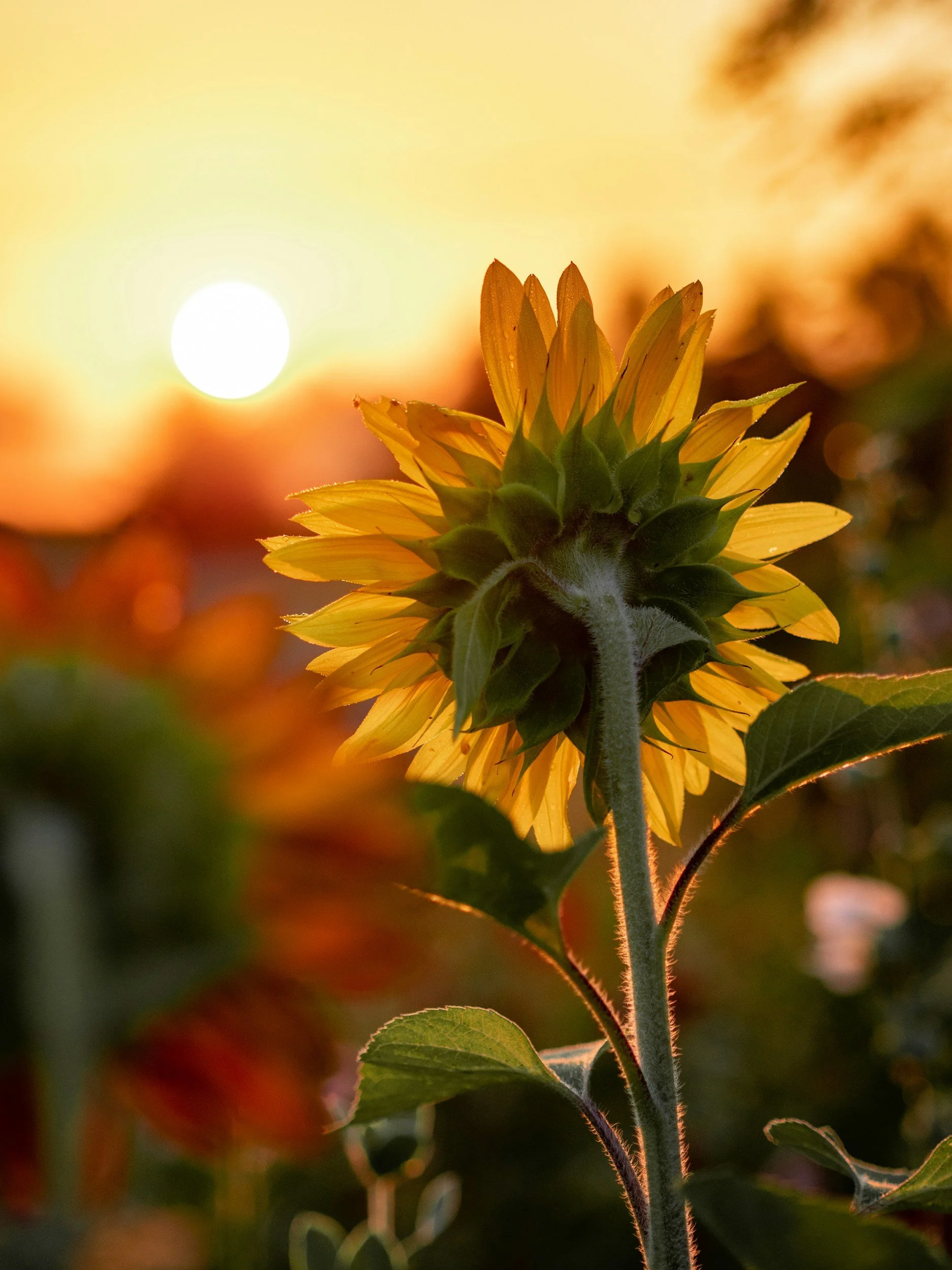
Generating my own energy does not look like effort. Taking was effort, performing, proving, staying alert to whether the supply might run dry. There was the waiting, the long and painful waiting to be acknowledged, seen, heard and recognized. Generating looks more like return, to breath, to sleep, to sun, to the plain unglamorous rhythms of a body that was designed to be alive on its own terms. Like a sunflower, rooted in soil, turning its whole face toward the sun without asking permission, without performing the turning for anyone watching.
I am learning to test this in small, unwitnessed moments. Can I feel moved by something beautiful with no one there to see me feel it? Can I metabolize my own worth without waiting for someone else's response to confirm it exists?
I am noticing that what I give from that fuller place is different in kind from what I used to give. Depleted giving needed to be received, appreciated, returned, or it would quietly curdle into resentment. What moves through me now, when I am actually rooted, does not require the same return. It simply moves outward, because there was finally enough.
I am starting to understand that these were never two separate lessons. Receiving is what makes generating possible. You cannot turn toward your own sun until you have first let yourself be reached by the light that was already here, the one running through your mother, and through hers before her, all the way back to the source that needed no permission to give it.
The dragon does not disappear because we fought it into kitten size. It shrinks the moment we finally look. What is left, once we are no longer spending our whole lives refusing to see, is enough life force to root, to turn, to give from fullness instead of hunger.
Life already chose us. We are here. We were given breath before we accomplished anything. We were loved imperfectly before we became worthy. We were part of a lineage before we created anything.
And if we desire to hear the deeper tunes, we must keep believing in dragons, angels, unicorns, and all the other magical creatures that our world has marked For Children Only.

Calliope Speaks
I recently read about a small wellness studio that began in one rented room above someone else's business. Then four rooms. Then eight. Now fourteen, and still not finished growing.
What struck me wasn't the growth. It was the beginning. Someone deciding to make space for something sacred before there was any proof it would hold.
I kept thinking that this is how I have always worked.
I am Calliope. You may not have been formally introduced, though you have almost certainly met me before, usually without knowing my name.
I am the one who arrives when you are trying to say something true and the words won't yet come. I am not impatient with you for that. I have never once been impatient with anyone who was trying honestly to speak.
People imagine muses as demanding. Come when I summon you, they think, and I will vanish just as easily, leaving you to wait. That has never been how I work, and I would like to correct the record, gently, now that I finally have your attention.
I do not withhold myself to prove my worth. I come because something in you has opened a door, and I was already standing nearby. That is all. It has always been enough.
My son learned this before he understood it. Orpheus did not charm the underworld with technique. He charmed it because he sang from a place so undefended that even the dead paused to listen. I did not teach him to sing that way. I simply stayed close enough that he remembered he already could.
This is what I want you to know, standing here at the start of something that will grow room by room, the way most sacred things do.
You do not need to become impressive before I will visit you.
The one room above someone else's business, the very first desk, the first gathering, the first offering, that was never too small to hold something true.
I have been arriving in rooms like that since before anyone thought to write my name down.
I am not here to tell you what to build. I am here to remind you that the impulse to build it, the small persistent knocking that will not quite leave you alone, that was already me. It always was.
Ask, and I will tell you what I told my son.
Do not wait for the larger room. Do not wait for certainty. Do not wait until the song sounds finished in your own ears. Begin where you are. The first room is enough. The first listener is enough. The first honest sentence is enough.
Sing anyway.
Sing from wherever you actually are.
I have always known how to find you there.
Which One Has Been Knocking?
There is a particular kind of morning, I had one just yesterday, where an idea arrives and you don't quite know where it came from. It wasn't built. It wasn't reasoned into being. It simply knocked, and you opened the door, and there it was, already half-formed, asking to be let in.
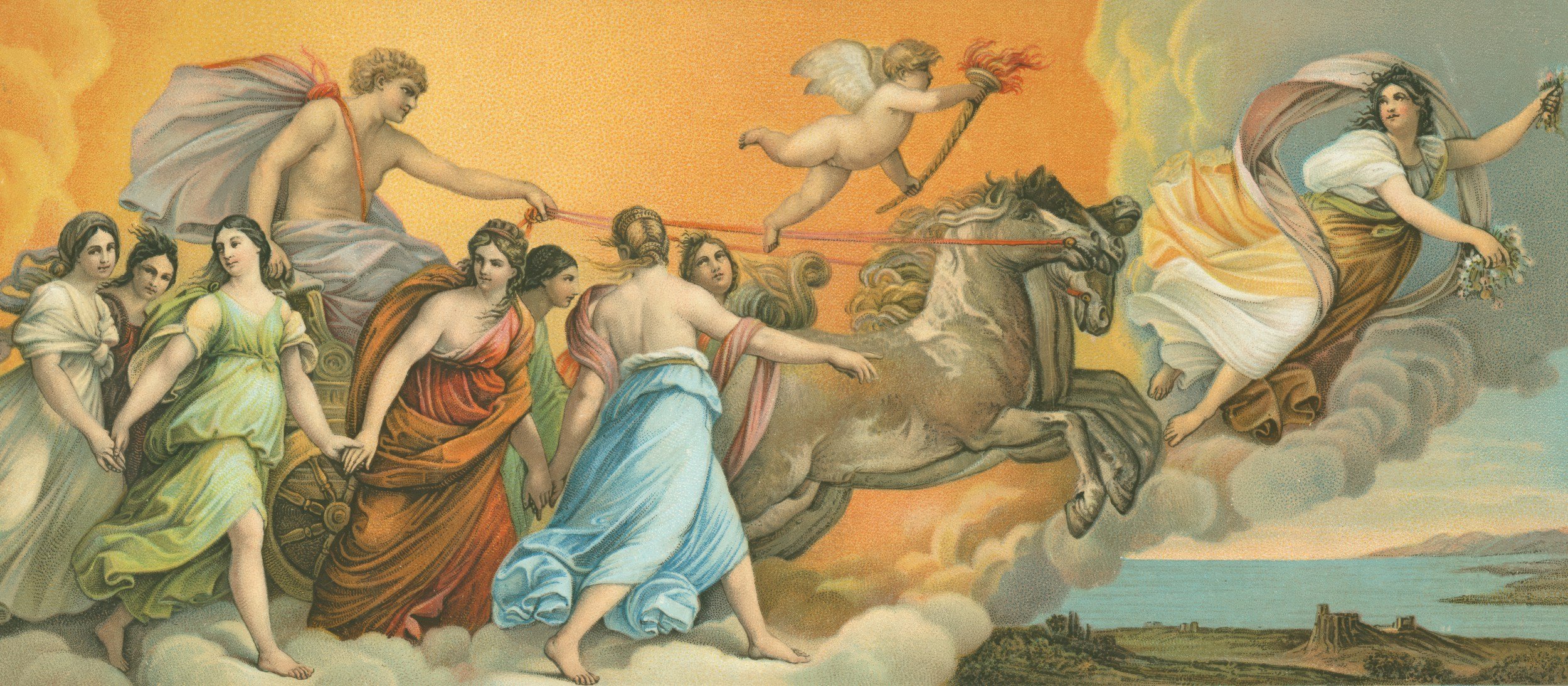
The Greeks had a name for what does the knocking. They called them the Muses — nine daughters of Zeus and Mnemosyne, each one presiding over a different room of the inspired life.
Calliope.
The eldest. The muse of epic poetry and eloquence. She carries a certain quiet authority. She is, after all, the mother of Orpheus, whose music was said to soften stones and persuade even the underworld to loosen its grip.
I found myself lingering with her, and then wondering about her sisters.
Who are they? What have they been carrying all this time? Why, after more than three thousand years, do they still find their way into our language?
So here they are, before I invite each of them to speak in the weeks ahead.
Calliope — who gives language to what matters most and reminds us that words can shape the course of a life.
Clio — who keeps memory honest, refusing to let us forget what has shaped us.
Erato — who knows that desire is more than romance; it is the force that draws us toward beauty, intimacy, and life itself.
Euterpe — who turns breath into music and reminds us that joy also has a voice.
Melpomene — who teaches that grief, when welcomed rather than avoided, becomes wisdom.
Thalia — who laughs not because life is shallow, but because lightness can hold tremendous depth.
Polyhymnia — who inhabits silence until silence becomes prayer, and prayer becomes song.
Terpsichore — who reminds us that some truths can only be learned by moving our bodies.
Urania — who invites us to lift our gaze toward the stars, where perspective itself becomes a form of wisdom.
I don't think it's an accident that we've kept these nine alive in our imagination for so long. Long after their temples crumbled, we still speak of having a visit from the muse.
We rarely notice what we're saying.
Inspiration does not feel manufactured. It feels visited.
I feel that's because creativity has never belonged entirely to us. It has always been a conversation between our willingness to listen and something quietly waiting to be heard.
So over the next several weeks, I'd like to spend time with each of the Muses.
I’ll meet them not as mythological figures preserved behind museum glass, but as living archetypes that still seem to visit us. I'll let each one speak in her own voice, with her own temperament, her own questions, and her own gifts, and together we'll explore what they might still have to teach us about creating, grieving, remembering, loving, laughing, praying, moving, and wondering.
The real question isn't whether the Muses still exist. The question is whether we still know how to listen because I suspect most of us already know which one has been knocking. We've simply been too busy, too tired, or too doubtful to answer.
The anthropologist Angeles Arrien, who spent years studying these nine sisters, called them "the issue of Divine love", daughters not of chance but of Zeus and Mnemosyne, will and memory, meeting. If that is true, then creativity itself is what happens when divine love meets memory. Every poem, every insight, every hand-built thing that ever moved someone to tears was, in this frame, a small act of divine love remembering itself through us. We do not manufacture inspiration. We simply become still enough, and honest enough, for memory to be touched by something eternal, and something is born.
The Greeks counted nine. But I suspect the counting was never really the point. My friend Jonah, this week, was visited by Gratitude. She isn't on the ancient list. She came anyway.
That is the real inheritance the Muses left us: not nine fixed names to memorize, but permission to notice when something larger than ourselves knocks, and to open the door, whatever form it takes when it arrives.
Which one has been waiting at your door?

The Quiet Gift of Ariadne
We often think transformation requires a hero. Greek mythology quietly suggests otherwise. Sometimes all we need is someone willing to place a thread in our hands before we enter the labyrinth.
The story itself is one of the best known in Greek mythology. The city of Athens lived under a terrible burden. Every nine years it was required to send seven young men and seven young women to Crete as tribute to King Minos. There they were led into the Labyrinth, a vast and bewildering maze built by the craftsman Daedalus. At its center lived the Minotaur, a creature with the body of a man and the head of a bull. No one who entered ever returned.
The young prince Theseus volunteered to be one of the fourteen. His intention was not merely to survive, but to kill the Minotaur and free Athens from its long cycle of fear.
When he arrived in Crete, someone unexpected intervened. Ariadne, the daughter of King Minos, fell in love with him. Knowing that courage alone would not be enough, she offered two gifts: a sword to confront the Minotaur, and a simple ball of thread. Before entering the Labyrinth, Theseus tied one end to the entrance and carried the rest with him as he walked deeper into the maze.
He found the Minotaur. He defeated it, but that was only half the journey. The real challenge was finding his way back. Without Ariadne's thread, the hero who conquered the monster would have remained trapped inside the Labyrinth forever.
We tend to remember the battle. The Greeks quietly remind us to remember the thread.
That small detail has lingered in human imagination for more than two thousand years, because it is not only a story about courage. It is about guidance, relationship, and the quiet gifts that make transformation possible.
The thread seems almost insignificant beside the sword. It doesn't slay the Minotaur. It doesn't make headlines. It doesn't look heroic, and yet without it, the victory would have meant very little. What good is defeating the monster if you cannot find your way home?
Every one of us eventually enters a labyrinth, not one made of stone, but of grief, uncertainty, family patterns, relationships, illness, loss, or the long search for who we are becoming. When we find ourselves lost, our first instinct is usually to search for a hero, the one who slays the monster, overcomes the obstacle, and leads everyone safely home. Greek mythology quietly suggests we may have been paying attention to the wrong character all along. Maybe what we need first is someone willing to place a thread in our hands.
Ariadne did not fight the monster. She did not build the labyrinth. She did not walk it for him. She simply placed a thread in his hands. It is one of the quietest gestures in all of mythology, and perhaps one of the most profound.
A thread is a curious thing. It doesn't eliminate the labyrinth. It doesn't reveal the entire path. It simply keeps us connected to where we began. As long as we hold it, we may wander, we may become frightened, we may even lose sight of the entrance, but we are never entirely lost.
I've been thinking about Ariadne because, looking back over my own life, I can see the threads that were quietly placed in my hands. There was the high school teacher who awakened my curiosity for the hidden dimensions of life. Graduate professors who welcomed my eager inquisitiveness before I fully trusted it myself. Spiritual teachers who invited me to see differently. A coach who has guided me with real compassion. My children, who have become some of my greatest teachers.
Not all of those threads came from people. Some arrived from the imaginal world itself like a dream, a symbol, a line in a poem, a scribbled note in a randomly opened book, a card pulled from a deck, a myth that refused to leave me alone. Over time I learned to trust them, or more accurately, I learned to trust that not everything essential announces itself through reason alone.
During my recent trip to Bulgaria, in the middle of a disoriented and uncertain season, Ariadne appeared as one of those images that seemed to know more than I did. It was as though she extended her hand and reminded me that I didn't need to see the entire way forward. I only needed to keep hold of the thread. While writing my book, Ariadne returned as a recognition. I didn't fully understand why. I simply wrote.
Nothing around me changed immediately. The labyrinth remained the labyrinth. But I no longer felt abandoned within it.
All I had to do was hold on.
This is how guidance has always worked. Rarely by removing the labyrinth. More often by placing a thread in our hands and quietly reminding us that we do not have to walk it alone.
I've come to believe that all true guides are descendants of Ariadne. They do not ask us to follow them. They teach us how to stay connected to ourselves.
There comes a day when we realize the thread we have been holding all along is sturdy enough to offer to someone else, not to rescue them, but simply to remind them that no labyrinth lasts forever, and that the way through is found one faithful step at a time.
Loving Differently
Something strange happens once you begin to outgrow an old way of loving. You still get triggered. Your nervous system still reaches for familiar defenses. The old personality still knows exactly how to argue its case, but somewhere in the middle of the conflict, another part of you quietly says, "We've been here before." You can already see where this road ends. Once you know, you know. The old way of loving no longer fits. Even if you momentarily fall back into familiar defenses, you can witness the impossibility of where they lead. The dead end is no longer invisible.
There is an ancient story that knows this territory.
There was once a queen named Inanna who ruled the upper world with confidence and grace. One day she heard a knocking from below, from the Great Below, where her sister Ereshkigal ruled in darkness and grief. Inanna decided to go. At the first gate she was asked to remove her crown. At the second, her robes. At the third, her jewels. At each gate she asked why. The gatekeeper answered the same way every time: Such are the ways of the underworld. By the time she reached her sister, Inanna had nothing left, no title, beauty, nor defense. She stood before Ereshkigal naked and small, and Ereshkigal, who had never been visited, who had only ever been left alone with her grief, looked at her sister and wept. It was the first time anyone had come down to meet her where she was. Inanna was released. She rose back through the gates, reclaiming what she had surrendered, but those who knew her said she was never quite the same. She had learned that the way to the other is always down, never up. Always through surrender, never through victory.
Bert Hellinger, who spent decades witnessing what heals and what doesn't in human systems, said it simply: a solution requires humility.
These are the three descents.
First, return to yourself. You reach out and hug your inner child. You ensure yourself that you are safe and supported. You have your own back. Loving yourself in the midst of not liking yourself is essential. Many times it is difficult to access that love, but connecting with the Divine presence at your center, with that glowing ember within you, is the key to unlocking an outpour of love and appreciation. When you feel loved and valued, you are no longer ruled by the fear of feeling small, rejected, or abandoned in the presence of another. The lens from which you perceive the world becomes embracing and hopeful.
Second, return to the other. You see their hurts and protections and focus on their inner child and the sacredness of their soul. By doing that, you are not abandoning yourself, but offering them enough space to feel safe and seen. From there, they can open up to their vulnerabilities and begin to see the tragic pattern both personalities are trapped inside. It is two false personalities bracing for survival, each trying to secure a victory that never truly satisfies. The hungry ghost will continue chasing the next victory, and the love will fade and the resentment will blossom. This is an unbearable way of relating.
Third, return to the field between you. You apply the law of three to the scenario. The affirming force is the validity of what you feel, the denying force is where they stand, and you allow the third force to arise naturally by giving it air. That means you surrender the tight grip and the need to prove yourself right. You stand in neutrality. Then there will be room for the reconciling force to appear, and something new arises between you, a way of relating that is more conscious, more intentional, more liberating, more generative.
What is obvious in this order of steps is that your ego steps aside. It is no longer the director of the orchestra. Your Essence quietly takes its rightful place and softens everything it touches. You become willing to see yourself, the other, and the living field between the two of you through the eyes of the soul rather than the personality. There is no longer subject and object, the duality has dissolved or at least it doesn't prevail. There is only the desire to be loved, to love, to give and receive. Your whole vessel of Being is open to the world of possibilities.
While writing, I realized something that surprised me. None of these movements began with discipline. They began with love. Love had already arrived before my decision to love.
Reading Valentin Tomberg, I realized I had not discovered something new. I had simply stumbled into a truth others had articulated long before me. What I experienced in the midst of conflict was precisely what he describes: love did not arise because I chose differently. My capacity to choose differently arose because something deeper than my personality had already begun to love.
As I sat with this realization, I found myself wondering which Major Arcana card best expressed it. Naturally, I landed on The Lovers. Tomberg, in Meditations on the Tarot, declares that love precedes choice. Love awakens first. Then choice becomes meaningful. Without love there is only calculation. Love illuminates what is worth choosing.
The Lovers reminds us that wisdom is relational. It arises from love, and not merely from intellect. Partnership is not merely companionship. It is a school of transformation. Each partner becomes a mirror through which hidden aspects of the self become visible. Love gradually transforms attraction into care, honesty, forgiveness, and a willingness to be changed by the other. Forgiveness not as power over another, but forgiveness as liberation from the weight of what was done. A release that frees both people equally. The relationship becomes less about finding completion in the other and more about discovering how love reveals what in us still longs to grow.
The Lovers is not fundamentally about romantic love. It is about the birth of conscience. Conscience is where truth and love meet. It is the capacity to recognize the Good inwardly rather than merely obeying it outwardly. It is making choices that honor the soul.
In that sense, The Lovers is about choosing the kind of consciousness from which all other choices will be made. Once that center is transformed, the individual decisions of life begin to take on a different quality.
Every conflict quietly asks the same question: from which self will I choose to love? The frightened one that longs to win, or the deeper one that already knows love is not something we manufacture, but something we remember?
Love has always been waiting just beneath our defenses, moving ahead of our choice, asking only that we become spacious enough to recognize it.

Seeing Differently
Since I became an entrepreneur, I get asked often for my elevator speech. I find it difficult to summarize everything I hope to contribute in just a couple of sentences, so I sat with the question. To understand what I offer, I first had to understand what drew me onto this path in the first place.
I traced the thread back to a young girl who lined up her dolls as students and played teacher. Years later, that impulse led me into higher education, where I spent much of my life mentoring, teaching, and helping others navigate transitions. Somewhere along the way, a deeper question emerged. It was no longer enough to help people acquire knowledge. I became fascinated by perception itself, by why we see what we see, why we repeat certain patterns, and what becomes possible when our awareness changes.
That curiosity eventually led me somewhere I had not anticipated. Through my own seasons of loss, transition, and inner searching, I found myself drawn into the territory of healing, consciousness, and transformation, not as abstract ideas, but as lived experience. What I discovered is that spiritual development is not about becoming someone else. It is about learning to see differently.
When we move through life on automatic pilot, our attention is easily captured by habits, assumptions, fears, and familiar stories. We react more than we respond. We identify with the personality we have constructed and mistake it for the whole of who we are. The world appears fragmented: self and other, success and failure, problem and solution.
Even our thoughts and reactions often tell us more about the inner images through which we interpret the world than about reality itself. Learning to recognize that difference is the beginning of freedom.
As awareness deepens, a different way of seeing begins to emerge. We become capable of noticing the hidden patterns shaping our lives, the loyalties we carry, the stories we inherited, and the unconscious forces influencing our choices. Our perspective becomes less reactive and more spacious. We begin to respond to life from a deeper center rather than from conditioning alone.
This realization has become the heart of my work. I am not interested in helping people become more spiritual as much as I am interested in helping them see more clearly. Because when we see differently, we live differently. What once felt like a dead end can become a doorway. What once felt like fate can reveal itself as a pattern. And what once felt fragmented can begin to return to wholeness.
Seeing differently is not a dramatic event. It rarely arrives as a sudden revelation. It is more like a gradual shift in the quality of attention, a growing capacity to pause before reacting, to notice what is actually happening beneath the surface of an experience rather than simply being carried by it.
It means becoming curious about the pattern beneath the symptom. It means discerning what is genuinely ours to carry and what we can gently set down. It means meeting our own reactions with honest inquiry rather than judgment. It means finding, in the midst of an ordinary moment, a choice we did not know was available.
Seeing differently requires more than a shift in thinking. The nervous system is the first organ to develop, twenty days after conception, before thought, before language, before any capacity for story. The body's intelligence is not secondary to the mind. It is the foundation everything else is built on. Which means the patterns we carry do not only live in our thoughts and narratives. They live in the body, in its tensions, its automatic responses, its way of orienting toward the world before any conscious decision is made. Real shift, the kind that actually changes how we move through life rather than simply how we think about it, has to reach that deeper place.
This is why embodied practice matters alongside reflection. Slowing down enough to feel what is happening in the body rather than only thinking about it. Noticing where a pattern lives in the chest, the shoulders, the breath. Moving through something rather than only analyzing it. These are not supplementary to the work of seeing differently. They are often the very place where the shift finally lands.
Let me offer a small example. Before I began to see more clearly, conflict was something I approached with an urgent need to prove my own righteousness. When I felt unseen, misunderstood, or hurt, I instinctively looked to the other person to restore my sense of peace. I sought it outside myself, through familiar strategies I had never consciously chosen, pushing harder, seeking validation, making sure the other person understood they were wrong. I was reacting from the personality I had constructed, not from anything deeper.
Now, when conflict arises, I notice something shift in my body before I speak. A tightening that used to be the signal to push harder has become instead an invitation to pause. I breathe into it. I ask what it is showing me rather than what it is doing to me. I see it as a mirror, and I look for ways to give myself what I need in that hurt place, rather than demanding it from the situation or the other person. This practice is not always easy, but it is a more empowered way of being. Quietly, it changes the quality of every relationship I bring it into.
So when someone asks me what I do, this is the truest answer I can offer: I help people see differently, because when we see differently, we live differently.
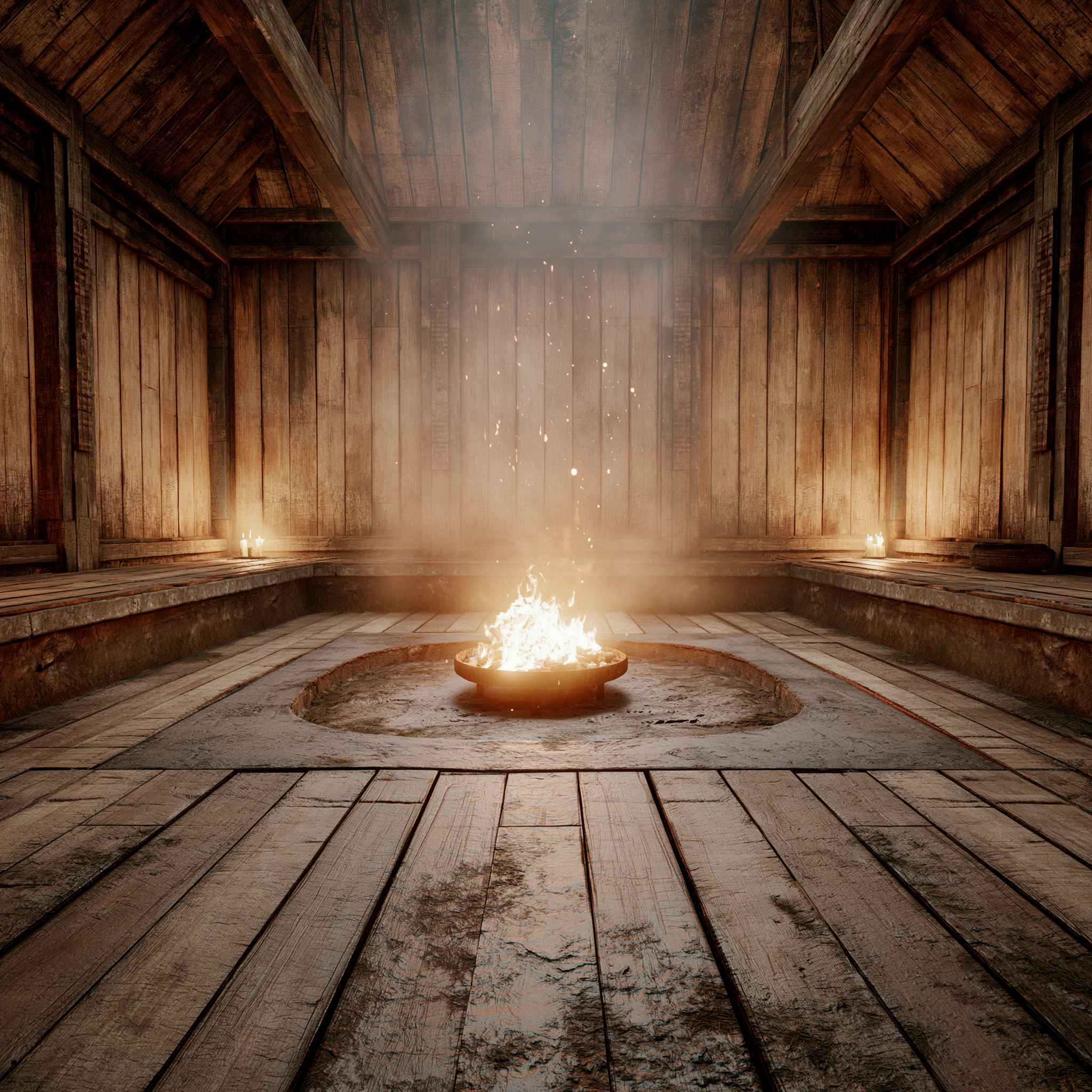
Tending the Fire
There are seasons when the fire goes quiet.
It is not all at once, but gradually, almost imperceptibly, the thing that makes life feel worth living, the pull toward beauty, the sense that something is possible, the felt aliveness of being here begins to recede. Hope does not disappear so much as become theoretical. Inspiration, which once arrived unbidden, now feels like something that happens to other people.
If you have been there, you know the particular quality of that silence. It is not the silence of rest. It is the silence of a room where something essential has left without saying goodbye.
I have been there recently. What brought me back was a family constellation. It was a sudden shift in perception, the kind of seeing that only happens when the system around you is made visible, and something in it rearranges without effort or force.
It asked me to tend to my Inner Center.
In the Symposium, Plato's Diotima describes Eros as a daemon, something between human and divine, always longing, always reaching toward what it does not yet possess. He desires because he does not yet have. He moves the soul upward, from the love of a beautiful body, to the love of beautiful souls, to the love of beauty itself. Eros is the engine of spiritual ascent precisely because he is never satisfied. He carries us forward through longing.
The Muse moves differently. Where Eros reaches outward and upward from a place of yearning, the Muse arrives, descends, visits, and inspires. The artist or poet doesn't pursue the Muse so much as become available to her. She requires a kind of emptying, a receptivity, a willingness to be used by something larger. The Muse is less about longing and more about surrender and attention.
Why do they leave? Why the impermanence?
I don't think they actually leave. I think we lose our capacity to receive them, through exhaustion, through accumulated grief, through the weight of what we have been carrying without knowing it. Eros and the Muse require a certain inner spaciousness to land. When that space closes, they have nowhere to arrive.
Something still remains.
This is where Vesta enters as the quiet keeper of what does not go out. Even in the coldest seasons, even when Eros has gone silent and the Muse has stopped visiting, something continues to glow at the center. Vesta does not relight the fire. She tends the ember that was never entirely extinguished.
Vesta, the Roman goddess of the hearth, represents a form of power that our culture rarely celebrates. She does not conquer, persuade, or seek recognition. She tends the fire.
In ancient Rome, the hearth was not merely a place to cook. It was the spiritual center of the home, and the sacred flame in the Temple of Vesta symbolized the life and continuity of the entire community. As long as the fire remained lit, there was a living center around which life could gather.
Unlike many gods and goddesses, Vesta has almost no myths. She is not defined by dramatic events or heroic deeds, but by quiet presence. She reminds us that not all transformation happens through action. Some of it happens through tending, remaining, and creating a space where life can unfold.
Psychologically, the hearth can be understood as our inner center, the place we return to when the many identities we carry begin to fall away. When careers change, relationships change, roles come and go, the deeper question remains: What continues to burn at the center of our lives?
The image of Vesta suggests that our calling may not always be to accomplish more, but to tend the inner flame with devotion. When the hearth is alive, people naturally gather around it. Warmth invites. Presence nourishes. Transformation happens not because someone is trying to change others, but because a living center has been created.
The work of tending the inner fire is not separate from our work in the world. It is the very source from which meaningful work, authentic relationships, and genuine service arise.
How I tend to my inner flame is through devotional practice. It is intentional, unglamorous, and repeated. Our hectic lives pull us in numerous directions, and while the connection to that center can feel distant at times, as long as we return to the ember glowing within, we remain open to receive.
What that looks like for me is simple and sensory. Flowers. Birds. Green. Gestures of kindness. Prayer to the unseen. Faith in the transcendent. Crafting with my hands. Being present in the moment, in relationship or alone. Tending to my body through movement or food prepared with care and love.
Gurdjieff taught me about three-centered awareness, the balancing of the intellectual, emotional, and moving centers. Our culture privileges the intellectual center, but it is not the fastest or most alive. Feeling and movement are not secondary to inner life. They are the inner life.
This connects to something Gurdjieff called the Law of Three. Nothing is resolved through simple polarity. The tension between two opposing forces does not resolve itself. A third force is always necessary for a new arising. Yet, we rarely leave space for that reconciling force to arrive. We rush toward resolution. We fill the silence. We miss the third thing entirely, and we fall into stuckness, cycling between the same two poles without movement.
Vesta is perhaps that third force.
She is not Eros with his longing, or the Muse with her visitations, but the quiet, steadfast presence that holds the space between them; the hearth that neither pushes nor pulls, but simply remains, warm and waiting, so that when Eros and the Muse are ready to return, there is somewhere for them to come home to.
Tend your fire. As long as the ember glows, the cold is never final.

An Act of Recognition
I thought I was trying to understand kenosis. For months, I approached it as a spiritual principle to be studied, reflected upon, and eventually mastered. I read about surrender, self-emptying, trust, and fiat as though they were instructions for an inner practice. If only I could understand deeply enough, I reasoned, I would know how to let go.
Recently, while reflecting on Cynthia Bourgeault's writings on eros, agape, and kenosis, I realized something unsettling: I already know kenosis, not conceptually, but intimately.
I have met her in moments when every strategy was exhausted, when there was nothing left to hold onto, and something in me, or perhaps beyond me, simply released. I met her while watching my mother die. She clung fiercely to life until she couldn't. Then something softened and yielded. It was not defeat. It was not resignation. It was a profound letting go.
I have met her folded in a fetal position with no striving left in sight. I have met her when identities I spent years constructing were dismantled one by one, and I was asked to remain present to the unraveling. I have known her intimately, but always under conditions I would not have chosen for myself. Always when I was left with no other alternative. Fully prostrated.
While sinking deeper into this subject, I pulled a card from the Chimera Tarot and received the Hanged Man. I laughed when I saw it. Of course, the Hanged Man is kenosis.
In Meditations on the Tarot, Valentin Tomberg describes the Hanged Man as voluntary inversion. The figure hangs upside down, suspended between heaven and earth, no longer orienting himself according to the values of the ordinary world. What appears to be passivity is actually consent. What appears to be loss is the making of something sacred.
As I sat with the card, a question emerged that would not leave me alone: Why is surrender so difficult before exhaustion arrives? Why do I wait until every strategy fails? Why do I cling until my fingers can no longer hold?
One of my deepest longings is to learn how to love as God loves. Yet every step toward that longing seems to require relinquishing my insistence on how, when, and in what form it should arrive. Surrender, I am beginning to suspect, is not the abandonment of desire. It is the abandonment of control over its fulfillment.
Then something almost comical happened. After writing pages about kenosis, my computer froze. I tried everything to recover the document. When it finally reopened, the page was blank.
Kenosis.
This was not the idea, but the practice.
Maybe the deepest irony is this: my desire to understand surrender may itself be what must be surrendered.
What if the thing I most fear is not suffering but trust? What if I cling because surrender requires believing that I am held even when I cannot see what is holding me? I have surrendered many times when life left me no choice. The deeper invitation may be learning to surrender before the certainty, before the collapse, before the exhaustion. To hang like the Hanged Man between heaven and earth and remain there willingly. I do not yet know how to do that, but perhaps that admission is where kenosis begins.
Then something shifted. I had been writing about what I lacked, the chosen surrender, the trust before exhaustion, the not knowing how. But as I sat with the blank screen, something turned. I began to look not at what was missing but at what was already there.
Throughout the last year, I demonstrated so much surrender and trust.
I trusted enough to leave career paths that no longer fit.
I trusted enough to build something that doesn't yet have visible proof.
I trusted enough to disappoint expectations, including my own.
I trusted enough to stop and listen when my soul said "not yet."
I trusted enough to choose authenticity over security.
Those are not hypothetical acts of trust. They are concrete ones.
When I honestly examine my life, there is a substantial body of evidence that trust has already been operating.
What moves me is that this realization is itself a kind of kenosis. I am someone who has been practicing trust for years and has not fully recognized it. There is a relinquishment there too.
The relinquishment of a story about myself. Maybe “inhabiting” kenosis today was intentional.
Sometimes spiritual growth is not acquiring a new virtue. Sometimes it is finally seeing a virtue that has quietly matured inside you while your attention was elsewhere.
Before asking myself to trust more, perhaps there is a simpler practice: acknowledge the trust that is already here as a way of honoring the woman who kept saying yes, even when she was afraid.
Especially when she was afraid.
I do feel the emptying out. The need to become someone who trusts may finally be giving way to the recognition of someone who already does.
The Birth of the Second Body
Lately, I have been wondering whether healing is the right word for what happens after a certain point. We speak of it as repair, as resolving old wounds, as arriving at a place where the past no longer troubles us. Yet, I am beginning to suspect that some forms of healing are not about repair at all. They are about birth.
For years, I have examined patterns inherited from family, culture, and relationship. I have traced loyalties I did not know I carried. I have studied the ways we remain faithful to old stories long after they cease to serve us. Much of this work has been valuable. It has helped me understand the architecture of the first body.
By the first body, I do not mean the physical body. I mean the self that is given to us before we consciously participate in its creation.
This body is formed through inheritance. It is shaped by family systems, collective narratives, survival strategies, and early experiences of love. It learns what is safe and what is dangerous. It learns how much space it is permitted to occupy. It learns whom it must become in order to belong.
The first body is not false nor is it a mistake. It carries us through life.
Yet, there comes a moment when its wisdom becomes insufficient for the next stage of development.
The old ways of relating no longer fit. The identities that once provided stability begin to feel constricting. We may experience this as crisis, grief, longing, or disorientation. Something is ending, though we cannot yet see what is being born.
Many traditions describe this moment as death, but what if death is only half the story?
What if the deeper process is the birth of a second body?
This second body is not inherited. It is formed through conscious participation. It emerges when the old self and the emerging self are held together long enough for a third force to act.
In the language of the Law of Three, transformation does not occur because one side defeats the other. The old self does not need to be destroyed, nor does the new self arrive fully formed. Something else enters the conversation. A reconciling force. A deeper intelligence. A wisdom capable of holding both.
From this encounter, a new level of being becomes possible.
The second body does not reject the gifts of the first. It includes them. It carries forward the strength, devotion, and hard-won knowledge of the life that came before. Yet, it is no longer organized around the same center.
It speaks differently. It loves differently. It creates differently.
It is less concerned with proving and more concerned with participating. Less interested in certainty and more interested in relationship. Less focused on becoming someone and more focused on becoming fully present.
Perhaps this is why so many spiritual traditions place death at the threshold of awakening. Something must dissolve before a new form can emerge. Not because the old form was wrong, but because it can no longer contain the life that is trying to be born.
The question, then, is not whether we can leave the old self behind. The question is whether we are willing to allow the second body to arrive.
There is another layer to this process that I am only beginning to understand. Recently, I heard a statement from Cynthia Bourgeault that has stayed with me ever since: "The nature of love is to make things grow."
I have been living inside that sentence. If it is true, then perhaps we have misunderstood both love and transformation.
We often evaluate love by its permanence. Did it last? Did it become what we hoped? Did it give us what we wanted? But what if the deeper measure of love is not whether it stays, but whether it grows?
A garden grows. A child grows. A friendship grows. A soul grows. Even grief grows us.
Seen through this lens, the question shifts. Instead of asking whether an experience was successful, we ask what it brought into being.
What grew because of this encounter? What grew because of this loss? What grew because of this longing?
The old self loved me the only way she knew how. She carried inherited loyalties, developed strategies for survival, sought understanding, and tried to make sense of the world. She was imperfect, but she was not my enemy. She was participating in love's work, and because the nature of love is to grow things, something grew. Not certainty or mastery. Something far more mysterious.
The possibility of a second body.
It feels like this is what the Law of Three has been pointing toward all along. The active force, the receptive force, and the reconciling force do not merely resolve conflict. They create the conditions for new life. They allow something to emerge that neither force could have produced alone.
What if the reconciling force is love itself? Not sentiment, attachment, or romance, but the mysterious force that enables life to become more than it was.
Then the birth of the second body is not simply the result of healing. It is the fruit of love's labor.
The old self and the emerging self meet. Love holds the tension between them, and from that encounter, a new form of being is born.
The most important question is not whether we are healed, but “What is love trying to grow in me now?”
The Chimera Invited Me In
Since I started writing my reflections, I realized that what I write about is what I immerse myself in, so the inherited self, the invisible diaspora, and the borrowed mirror become the world I occupy fully until I integrate the lesson fully. Sometimes that requires my courage. I am consciously stepping into the painful parts of myself knowing I have to feel them with no abandon.
Today, I am diving into the fascination I have with the concept of chimera.
The popular understanding of the chimera is straightforward: a terrifying hybrid creature—lion, goat, serpent—slain by the hero Bellerophon. The word eventually came to mean a fantasy, an illusion, an impossible dream.
But what if the chimera's enduring power lies elsewhere?
What if the chimera is not merely a monster but an image of the human condition itself?
Etymologically, the Greek khimaira originally meant: "she-goat" or "young goat." Only later did it become associated with the hybrid creature. Even more interesting, some etymologists connect it to roots associated with winter (kheima), suggesting something linked to a difficult season, a destructive force, or a transitional period.
That alone feels symbolic. The chimera emerges from winter. From the in-between.
Carl Jung did not write extensively on the Chimera specifically, but his entire framework invites this kind of reading.
For Jung, mythological creatures often represent psychic realities: the dragon, the shadow, the trickster.
The monster is never merely external. The monster is an image of something within. A chimera is a being made of seemingly incompatible parts: lion, goat, serpent, instinct, desire, wisdom, fear, power. The psyche itself is chimeric.
If Jung asks, "What does this symbol mean?" James Hillman often asks, "What does this image want?"
Hillman resisted reducing mythic figures to psychological diagnoses.
The chimera need not be "solved." It can be encountered, lived with, imagined, and allowed to speak.
A chimera can be the beloved onto whom we unconsciously project many longings: parental love, divine love, romantic love, belonging, destiny, home. The image feels singular, but it is actually composed of many layers. We think we are longing for one person, one opportunity, one future. In reality, the soul has woven many desires into a single image.
In that sense, a chimera isn't simply an illusion. It can also be a clue. It tells us something real about what the soul is trying to find, even if it is looking in the wrong place.
The philosophical meaning is the most interesting: a chimera is a thing that appears coherent from a distance but on closer inspection is a composite of incompatible elements held together by imagination or habit rather than by genuine unity.
What if the chimera represents the parts we consider incompatible, the inherited identities we carry, and the contradictions we try to resolve?
The inherited self, the identity assembled from parental expectations, cultural conditioning, early adaptations, and family loyalties, could itself be understood as a kind of chimera. It functions, moves through the world, and even believes itself to be a unified whole. Yet beneath the surface it is often a composite of parts gathered from different sources, different generations, and different survival strategies.
The work of maturation is not necessarily destroying this chimera but learning to disassemble it with care. Which parts are genuinely mine? Which parts were borrowed? Which belong to my family, my culture, or my history? Which emerged from fear, and which from essence?
Perhaps the inherited self is one of the first chimeras we encounter.
Many spiritual paths begin by seeking purity, but mature spirituality often moves toward integration.
The lion remains. The serpent remains. The goat remains. Nothing is eliminated. Something larger learns to hold them.
This echoes a theme found in Ken Wilber’s metaphysics: transcend and include. The goal is not to destroy earlier parts of ourselves. The goal is to integrate them. The chimera is integration taken to an unsettling extreme.
It reminds us that wholeness may look less tidy than perfection.
In biology, a chimera refers to an organism composed of genetically distinct cells. In complexity science, "chimera states" describe systems where order and disorder coexist simultaneously.
That stopped me because it sounds remarkably like something Gurdjieff intuited through the Law of Three. Not a simple polarity between opposing forces, but a reality in which multiple principles coexist and interact to produce something new. The chimera state suggests that apparent contradiction may not be a problem to solve but a condition of emergence.
Perhaps the chimera is not a monster but a threshold creature.
It appears wherever old identities and emerging possibilities overlap, wherever inheritance meets freedom, wherever longing meets becoming.
The chimera is not what we are after transformation. It is what we look like while transformation is taking place.
Part old story/Part new story
Part instinct/Part soul.
Part inherited/Part emerging.
A human contradiction learning how to hold its own divinity.
Here is where I was going to pause and publish the essay, but she asked me to wait and fully inhabit her, so I did.
The Chimera is not a centaur, a mermaid, or a harmonious hybrid. She is unsettling. She does not fit. She violates categories. She lures us beneath the surface, toward the places where longing, memory, imagination, and instinct intertwine.
The feminine principle, across many traditions, is associated with holding, containing, gestating, weaving, allowing. The womb does not resolve differences. It contains them. Life emerges through a period of paradox. The Chimera may be unsettling precisely because she embodies this capacity. She does not choose one truth over another. She carries multiple realities within a single body.
She shows us this most clearly in the movement of longing itself.
Fantasy says, “My longing means something is missing.” The chimera says, “My longing becomes attached to an image.” Then comes dismantling, “The image cannot carry everything I put into it.” Then comes the question, “The longing remains. What do I do with it?”
The answer that emerged surprised even me. The longing returns home, not to be extinguished, fulfilled, or denied.
It returns home to be related to. This may be why so many spiritual traditions eventually stop talking about fulfillment and start talking about participation.
Fulfillment sounds final. Longing is over. Case closed. Participation says, “The longing itself becomes part of the relationship.”
We spend years trying to satisfy our deepest longings. Then one day we discover they were never asking to be satisfied. They were asking to be listened to.
The chimera is not the enemy. The chimera is the soul's first attempt to understand its longing. This is why certain people, dreams, and possibilities arrive with such intensity. The image captivates us, not because it contains everything we seek, but because it carries us toward a deeper encounter with ourselves.
It takes home, belonging, God, love, recognition, destiny, and compresses them into a single image. The work is not to shame that process. The work is to lovingly unpack it.
Every chimera carries a longing. Every longing carries a truth. The task is not to destroy the chimera nor silence the longing. The task is to follow the longing back to the truth it protects.
Maybe that’s why the chimera invited me in her world. I am ready to understand what happens after the symbol dissolves.
The longing remains. That is where the real journey begins. The longing was never asking us to chase an image. It was asking us to become intimate with our own soul.
As I write this in a local coffee shop, the light above me keeps dimming and brightening. I smile at the coincidence. The Chimera seems to inhabit that rhythm: appearing and disappearing, revealing and concealing, illuminating one layer only to draw attention to another.
Chimera invites us to maintain a grounded presence in the body, while simultaneously opening to new ideas. It is the ability to receive information from life's experiences and discover the genius intelligence hidden inside each moment.
The Symbolists depicted the chimera frequently, and they did not generally treat the Chimera as a monster to be defeated. They treated her as an image of desire, imagination, yearning, and unattainable ideals.
One of the most famous examples is The Chimera by Gustave Moreau. When Moreau painted the Chimera, she was often perched upon a human figure rather than attacking one. She appeared almost seductive, dreamlike, intimate.
The Symbolists were fascinated by the idea that human beings are haunted by images, not merely deceived by them but haunted by them. The Symbolists understood something that modern psychology later articulated: Human beings do not simply desire things. They desire images. We fall in love with ideals, visions, possibilities, fantasies, and archetypes. Sometimes more than with reality itself.
The soul speaks in images because images move us.
The Chimera may be the symbolic form through which longing appears, a kind of messenger, a carrier, a threshold image.
The Symbolists might say, “Don't kill the Chimera.” Follow her.
She appears when reality and imagination overlap, old identities and new identities overlap, longing and fulfillment overlap, and the visible and invisible overlap. She belongs to thresholds. Symbolist art is essentially threshold art. It is always trying to depict what exists between worlds.
The next time the Chimera appears in your life, in a beloved, a dream, a future, a vocation, a longing, I invite you to pause before dismissing her as fantasy. Ask instead:
What does my longing reveal?
Why does this image enchant me?
What lives beneath this desire?
How do I follow the symbol without becoming trapped by it?
The Chimera may not be telling the truth literally, but she knows where the longing lives.
Postscript
It happened. Right in the midst of this Chimera invitation, the light guided me home.
I was still sitting in the coffee shop, surrounded by people on every side. Tears streamed down my face, yet all I could hear was the beating of my own heart. What became clear in that moment was simple and devastating: It is easier to hand the responsibility of carrying our deepest longings to an image than it is to carry them ourselves.
My longing to be seen, heard, known, and recognized had attached itself to others, but no person can permanently hold that task for us. No image can. That is why the image eventually dissolves.
Love is not an illusion, but the soul cannot be permanently outsourced.
The longing haunts us because it was never ultimately about the image. The image was carrying something we had not yet learned to carry ourselves. When the image falls away and we stand in the center of the ache, something unexpected becomes possible. The love, belonging, recognition, and union we had projected outward begin returning to us as inheritance.
This is why loss can become initiation. We recover what was always ours.
The image disappears. The longing remains. In learning to carry it consciously, we discover that the soul was never asking us to chase an image.
It was asking us to come home.
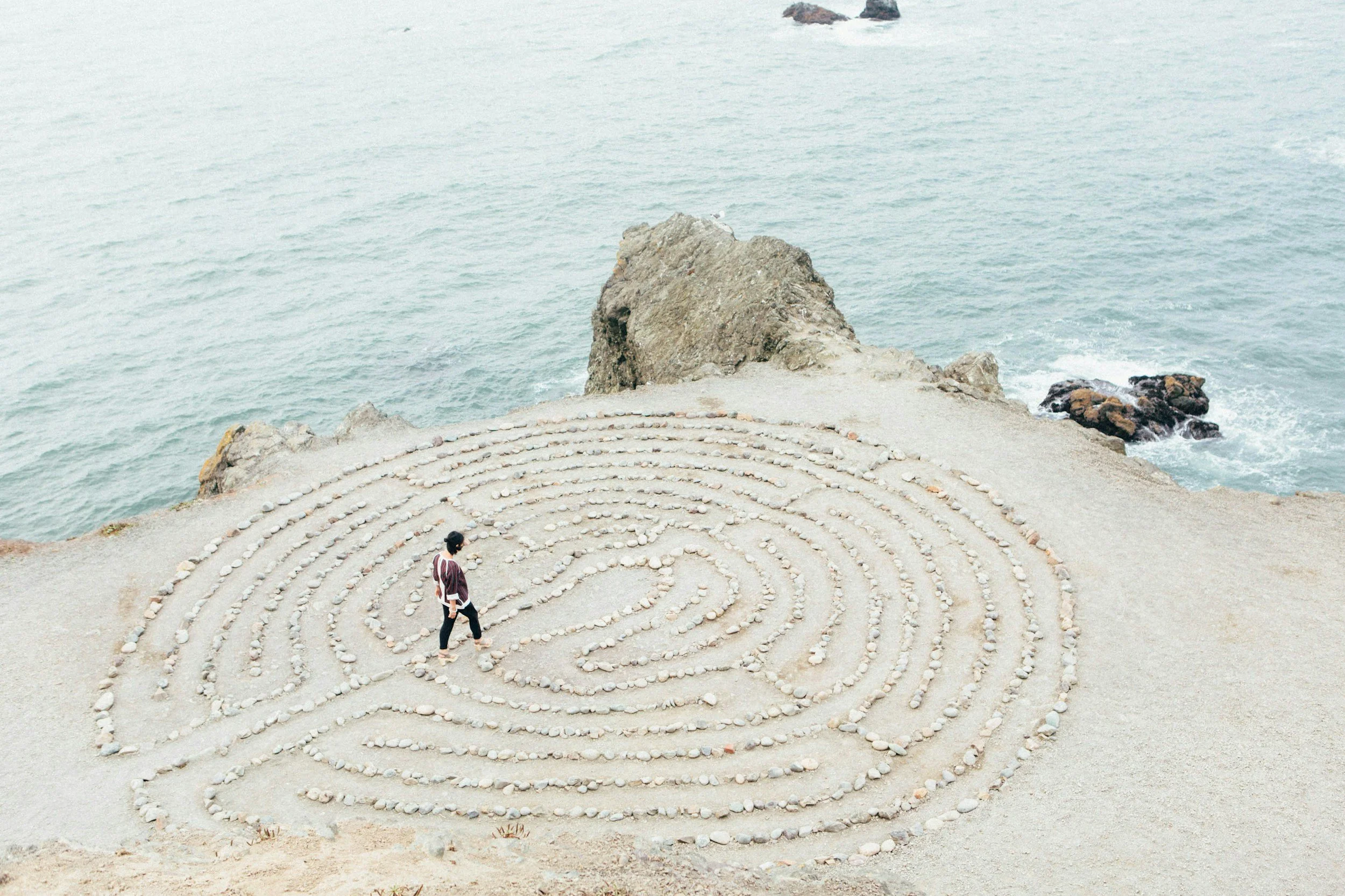
We Will Long Until We Return
There is a question that might be the human question: if Love is both where we come from and where we are going, why does the middle, the actual lived life, so often feel like estrangement from it?
I've been sitting with some threads that feel honest, and I want to offer them not as a tidy theology but as something more like a map drawn while still walking.
This is structural hope, not sentimental hope. I want to say that at the outset, because what follows could be mistaken for comfort, the kind that tries to soften the real difficulty of being human. It isn't that. It's something harder and more durable: the possibility that the structure of things itself is oriented toward Love, regardless of how lost we get in the middle.
Freedom requires distance. For Love to be genuinely chosen rather than simply undergone, there must be the real possibility of turning away from it. The middle is where that freedom is exercised, where consciousness develops enough self-awareness to move toward Love deliberately rather than automatically.
Gurdjieff's sleeping humanity is not fallen humanity. It is humanity that hasn't yet woken to what it already is. The estrangement is not punishment. It is the condition of real choosing.
Nicolas Berdyaev, whom Ken Wilber singles out as one of the few theologians to have seen this clearly, understood the Fall not as humiliation but as exaltation. Involution, the descent of Spirit into matter and forgetting, is the necessary first movement of evolution, the return of Spirit to itself with full consciousness. We had to leave Eden. Not because we failed, but because staying would have meant never choosing, never descending far enough to find our way back.
Eden before the Fall is innocence, but innocence is not yet wisdom. It is not yet love in the fullest sense. It is simply not-yet-having-chosen. The expulsion is not punishment. It is graduation into a harder and more magnificent story.
The Fall is the story of a Being great enough to descend into full separation, full forgetting, full freedom, and still find its way back, not because it had no choice, but because it chose.
That is what Berdyaev means by greatness, and it reframes everything that follows in the middle.
A love that could not be refused would not be love. It would be gravity.
The middle is where development happens. Teilhard de Chardin understood evolution as requiring friction, complexity, and apparent disorder before greater consciousness emerges. The middle is not a failure of Love but Love working through resistance. Ilia Delio's image stays with me: life eating through the shells of the dead. What looks like loss and estrangement is often the very mechanism of deepening.
This reframes everything. The human journey is not a tragedy with occasional glimpses of redemption. It is a deliberately structured arc, consciousness moving through freedom, through the experience of separation, toward a chosen return that means something precisely because it was chosen.
We confuse Love with its substitutes. Much of what gets lost in the middle is not Love itself but our images of it: the borrowed mirror, the inherited self, the validation we seek from outside because we haven't yet found the source within.
We lose the counterfeit and call it losing Love. The real thing was never absent, only obscured.
Ken Wilber calls this the great game of hide-and-seek, with Spirit as It. At every level of the journey, Spirit is not absent but hidden; not destroyed but obscured; not abandoned but forgotten. The agony of the middle is that the forgetting feels permanent, like a falling away that cannot be reversed, but obscured is not the same as gone. The game is already rigged toward finding.
Matthew Fox's theology of Original Blessing points toward the same structure. The first word spoken over creation is blessing, not condemnation. Love is not something we lost and must earn back. It is what remains beneath every layer of forgetting.
The mystics who came closest to this, Meister Eckhart, John of the Cross, Cynthia Bourgeault, tend to say that the apparent darkness and estrangement of the middle is somehow necessary rather than accidental. The Sufi tradition calls it ghayba, the divine hiddenness, the idea that God withdraws so that the soul can discover its own longing and turn toward the source freely rather than by compulsion.
There is an image I keep returning to: a child longing to be chosen by her parents. That longing, its urgency, its vulnerability, its willingness to keep reaching, is not a weakness. It is the template for the soul's relationship to God.
Like a lover, God wants to be chosen freely, and that only happens if we choose first. Even in a baby, there is reciprocity. Developmental psychology calls it serve and return, the caregiver responds to the infant's bid for connection, the infant learns that reaching out produces a response, that love is reciprocal rather than unilateral. Without that early serve and return, something in the capacity for connection remains undeveloped.
Perhaps what feels like God's absence in the middle is simply the ball in our court. It is not an abandonment, but an invitation.
"What if this pattern exists not only between the soul and God, but within every layer of human relationship?"
The serve and return dynamic doesn't stay contained to the personal. In Family Constellations work, love and belonging move through systems across generations. When a parent couldn't return the child's bid for connection, because of their own unresolved grief, trauma, or absence, the child adapts. They serve differently. They learn to reach in ways that might get a response, even a partial one.
The theological parallel holds: our capacity to reach toward the Divine and receive in return is shaped, at least in part, by what we learned early about whether reaching produces connection. Which means that healing those early relational patterns is not separate from the spiritual journey. It is part of it. The nervous system learning that reaching produces return. That love is genuinely reciprocal. That the serve will be met.
I am drawn to these questions not only intellectually. Certain forms of love have been among my greatest teachers, leading me through estrangement into a deeper understanding of what Love itself might be.
There is a journey I know from the inside, a love that I was certain was the destination, until I arrived at the realization that it is the doorway to God. At the time it felt like the whole thing had gone wrong. In retrospect, the estrangement was not a mistake. It was the condition for the choosing. The long circuitous route was the route.
I don't offer this as instruction. Each path is its own, but it clarified something: that Love as the Omega means everything is already moving toward it, whether consciously or not. Some souls return quickly and with awareness. Others take longer, but the direction is built into the nature of things.
Rumi's reed crying from separation will find the reed bed. The prodigal son will eventually come to himself and turn toward home. The invisible diaspora will find its inner homeland.
We will long until we return. That's the whole of it, really.
The longing itself is the evidence of the connection. You cannot long for what has no relationship to you. The very ache is proof of the thread.
Love never ceases drawing us toward itself, not because free will is an illusion, but because Love as Omega means the arc bends toward it. The longing doesn't end the journey. It is the journey, until it resolves into the thing it was always pointing at.
This is what I mean by structural hope. Not the hope that things will feel better, or that the estrangement won't hurt, or that the middle won't be long and strange and sometimes bewildering, but the hope that is rooted in the nature of Love itself: that nothing is wasted, that the distance was necessary, that the choosing is real, and that the return, when it comes, will mean something because of everything it moved through to get there.
Where in your own life has Love seemed furthest away, and where has it found you again?
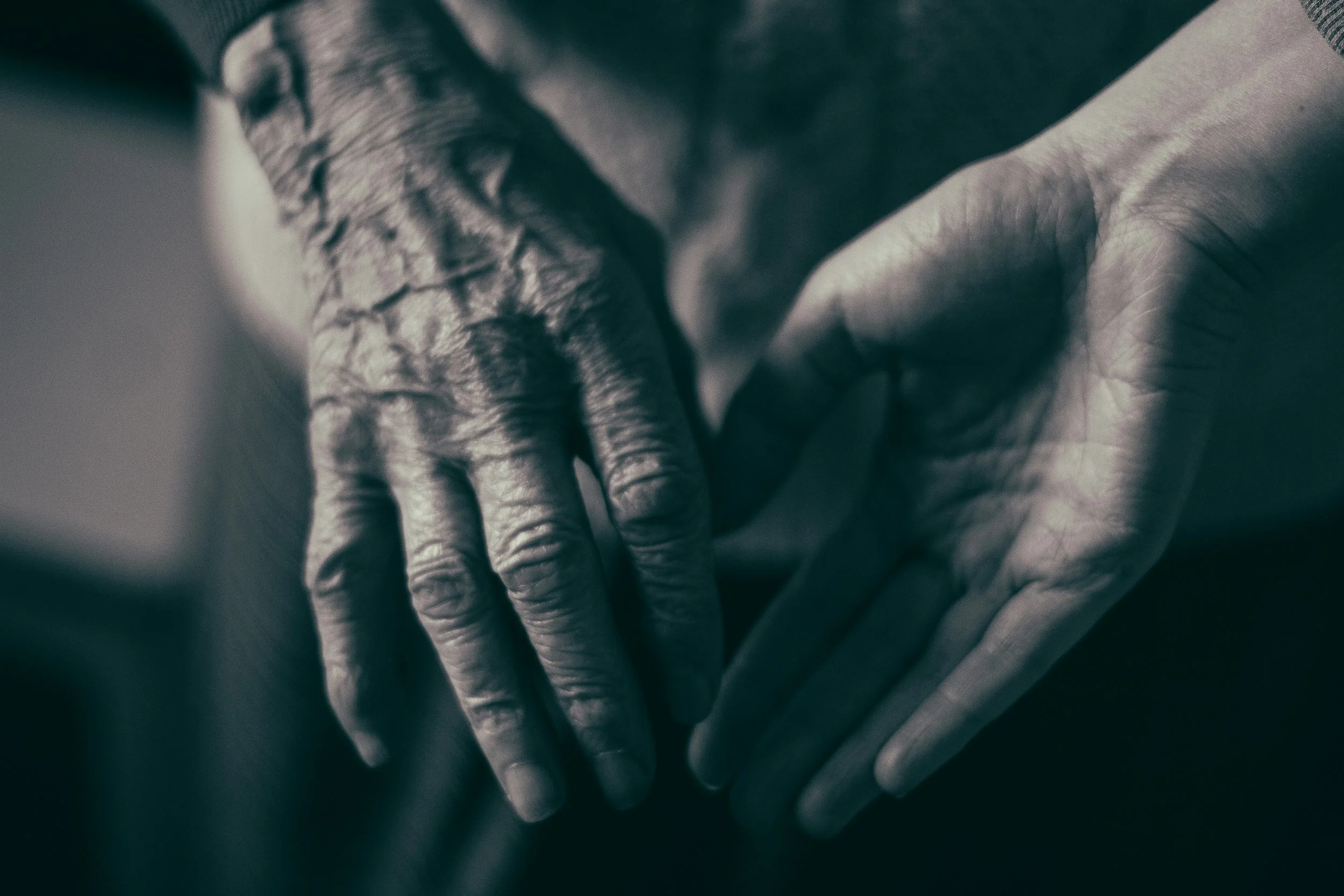
Love, Loyalty, and the Inherited Self
Sometimes we do not fall into relational patterns accidentally. We inherit emotional orientations long before we understand what love is. Most patterns don’t start with us.
We learn by observing our immediate environments. I learned that love comes with conditions and complications that must be navigated carefully. The adults around me loved in fragments and my needs were secondary to their emotional weather, so I learned to accept partial love, to work toward earning this love, believing that if I could be patient enough, good enough, understanding enough, I would be chosen wholeheartedly.
I call her the Patient One. She convinced me that waiting was a virtue instead of recognizing it as prison. She made me believe that my capacity to love the complicated made me special.
This pattern didn’t start with me. Through much revealing, I see it threading through the women in my lineage like a silver cord of beautiful, exhausting devotion. Grandmothers who loved men who couldn't fully choose them. Mothers who made peace with less than their hearts desired. Women who called patience love and loyalty wisdom, even when it cost them their own aliveness.
We learned to live inside thresholds. To prepare beautiful rooms for people who never fully arrived. There was this quality of perpetual waiting, of holding space for people to decide whether they wanted to enter our world completely. The house was beautiful, prepared, but there was dust gathering on the threshold from all the almosts.
This is what our nervous system learned to do: shine brightest when love is most uncertain.
Calm felt unfamiliar. Longing felt alive.
Children inherit emotional positions, not only wounds.
Through myself and others, I have encountered a number of inherited beliefs. Love requires waiting. Intensity equals meaning. Accommodation at the expense of self is normal in relationship. Our worth is measured by our capacity to endure uncertainty. Love and stability are separate.
We often inherit not only pain, but the way pain organizes intimacy.
When we are little, we love our parents deeply and desire their love in return. When we witness their unresolved relational patterns, something in us quietly decides to fix what they could not. We become loyal to their fate, drawn to similar dynamics, similar uncertainties, similar emotional terrain, because familiarity feels like belonging. This creates an internal bind: I must remain true to the emotional world I was born into, even when that world costs me something essential. Children are profoundly loyal. Many grow up carrying not only their own heartbreak but their parents' unfinished story.
So we recreate familiar dynamics and attempt to resolve the unresolved. We try to “finish” the parent story differently, confusing familiarity with truth.
Repetition is often an attempt at repair.
These patterns were not signs of weakness. They were adaptations, ways of preserving attachment, belonging, and emotional continuity inside imperfect systems.
Breaking the pattern requires awareness first. Grief often arrives shortly after, along with disorientation, because it can feel as though we are leaving behind the very people and emotional worlds we were once loyal to.
Breaking patterns often feels like guilt, disloyalty, betraying the family field, leaving an inherited emotional identity.
Breaking a generational pattern often feels like betrayal before it feels like freedom.
It begins with seeing clearly those who shaped us without condemning them. It is feeling compassion without reenactment. It is refusing to disappear into inherited structures. It requires no longer organizing our identity, nervous system, and sense of love around the inherited emotional structure.
Ending repetition is not betrayal. It is differentiation.
As children, we decide that being loyal is being loving, but as adults we come to realize that being loving may require breaking the patterns through which we once learned belonging. In doing so, we leave a more wholesome legacy for generations to come.
Marine Sélénée wrote in her book, Connected Fates, Separate Destinies: “Our fates are inevitably connected to our ancestors. There is no us without them. But our destinies do not have to be. Our destinies are a result of how we play that hand — the choices we make on the paths we walk through our lives. Our fates are where we came from; our destinies are where we are going.”
The deepest inheritance to question may not be whom we love, but what we learned love was supposed to feel like.
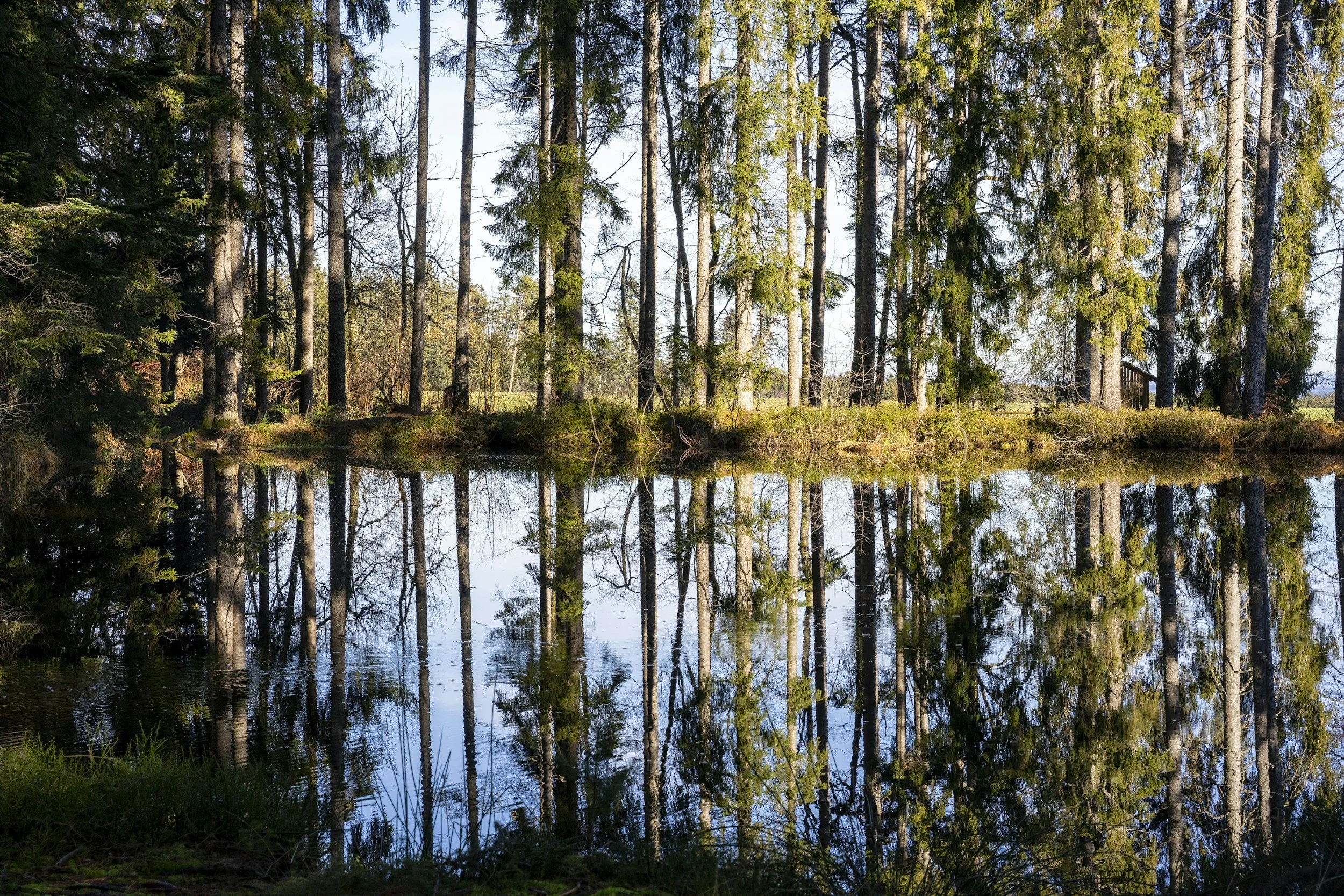
The Borrowed Mirror: Nations, Lovers, and the Hunger for Worth
When individuals or nations become disconnected from an inward sense of value, they begin organizing themselves around external approval. This creates instability, imitation, dependency, performance, and chronic dissatisfaction because no outside source can permanently resolve an inner fracture.
When identity becomes externally referenced, we experience attachment in relationships, the need for social performance, consumerism, cultural mimicry, intellectual dependency, and even spiritual seeking.
External recognition is not inherently bad. Humans and cultures do need mirroring, exchange, and relationship. The issue is when validation becomes compensatory, and it replaces rootedness.
On an individual level, we are familiar with how we have used relationships to stabilize our self-worth, careers as identity substitutes, social media praise as temporary nourishment, substances as relief from inner absence, constant achievement to avoid confronting emptiness, and emotional fusion mistaken for love.
The externally validated self cannot rest because it must continuously secure confirmation from outside itself, and without inward continuity, identity becomes reactive to applause, rejection, trends, or attachment.
Healing unworthiness and the persistent feeling of insufficiency feels like a common thread for many of us. I have tackled that block to love numerous times and continue to. Many times I wondered how deep the hurt was, that I could not uproot it after so much work. I have discovered that it is profoundly ingrained from generations back and tangles us into a variety of drama and inner dispersal.
Beneath many forms of external validation lies a mycelial network of unworthiness, invisible, adaptive, and deeply embedded into the psyche long before visible behaviors emerge.
In a forest, the mushroom is not the organism itself. It is only the visible expression of a vast underground intelligence called mycelium, a hidden network threading through soil, roots, decay, and living systems alike.
We tend to live psychologically in reverse, treating visible behaviors as isolated events while ignoring the invisible networks beneath them. We focus on the craving, the insecurity, the nationalism, the addiction to praise, the collapse of intimacy, while rarely asking what subterranean structure continues feeding them.
Perhaps unworthiness behaves like mycelium: diffuse, ancient, interconnected, and mostly unseen.
Countries also seek validation through comparison, imitation, geopolitics, prestige, tourism branding, and cultural self-erasure. I recognize this pattern not only in individuals, but also in the country I come from, Bulgaria, a place of immense beauty, memory, and cultural depth, yet one that often seems uncertain of its own value unless reflected back through external approval. What I have witnessed is pride and inferiority coexisting, rich cultural inheritance alongside chronic self-doubt, outward migration draining confidence, corruption and distrust weakening collective dignity, and performative modernization.
Bulgaria is just an example that I am familiar with. America seeks validation through dominance and productivity. Social media cultures through visibility. Empires through expansion. Intellectual classes through sophistication. Spiritual communities through purity or enlightenment.
Validation becomes addictive when inner value is not experientially grounded because external approval temporarily relieves an internal instability without actually resolving it. Praise, recognition, achievement, desirability, or collective prestige can momentarily create the feeling of worth, but only while the affirmation remains present. Once it fades, the underlying absence re-emerges, often stronger than before.
What makes this dynamic difficult is that the relief feels real. The relationship, the applause, the success, the attention, the international recognition all briefly soothe the fracture, but because the sense of value was received externally rather than developed inwardly, the psyche becomes dependent on repeated confirmation. Validation then stops being relational and becomes regulatory.
Recognition becomes oxygen rather than nourishment.
At both the individual and collective level, this creates a restless cycle: the more uncertain the inner foundation, the more urgently approval must be pursued from outside the self.
It becomes a cycle of alternating between pride and shame. The inner judge tells us of our ideal image, individually or collectively, and we experience pride when reality matches the image and shame when it contradicts it.
Having lived with this hungry ghost, I know the feelings viscerally. This reminds me of Laura Numeroff's children's book "If You Give a Moose a Muffin," in which one small offering sets off an escalating chain of requests, jam, a sweater, sock puppets, a full puppet show, each need spawning the next, until the moose arrives back at the beginning, hungry for another muffin.
Eventually, this hunger exhausts both the relationship and the spirit.
Isolation is not the answer and total self-sufficiency is not healthy. We do need relationship and recognition, but recognition should confirm being, not manufacture it. This distinction is subtle and important.
What is the path forward? It seems similar on both levels.
The same mycelial metaphor could eventually become positive. Healing, beauty, truth, memory, spiritual tradition, and authentic culture also spread underground before becoming visible, so the reflection we need to spend time with is what kind of underground network we are feeding.
At some point, diagnosis must give way to participation.
How we do it is by making a conscious effort to immerse ourselves in the good, the true, and the beautiful.
What is Good? ~ That which makes our soul sing in unison with nature and other spirits.
What is True? ~ That which flows and expands our life force.
What is Beautiful? ~ That which when witnessed summons Love in its many versions.
These are not abstractions. They are the underground network we can choose to feed, daily, quietly, through what we attend to and what we return to.
Let's begin here, in the quiet, and go deeper than the surface allows.
Who says our spirit has been broken? We are strong, resilient, and alive.
What a privilege to hold the paintbrush, to touch this world with color. Let's paint it beautiful, with every stroke of care and compassion.
Let's love it wildly. Let's show up real and raw and offer what our soul is asking of us.
Let's quiet down enough to hear her whispers.
Let's honor the gift of life, not the hungry ghost.