
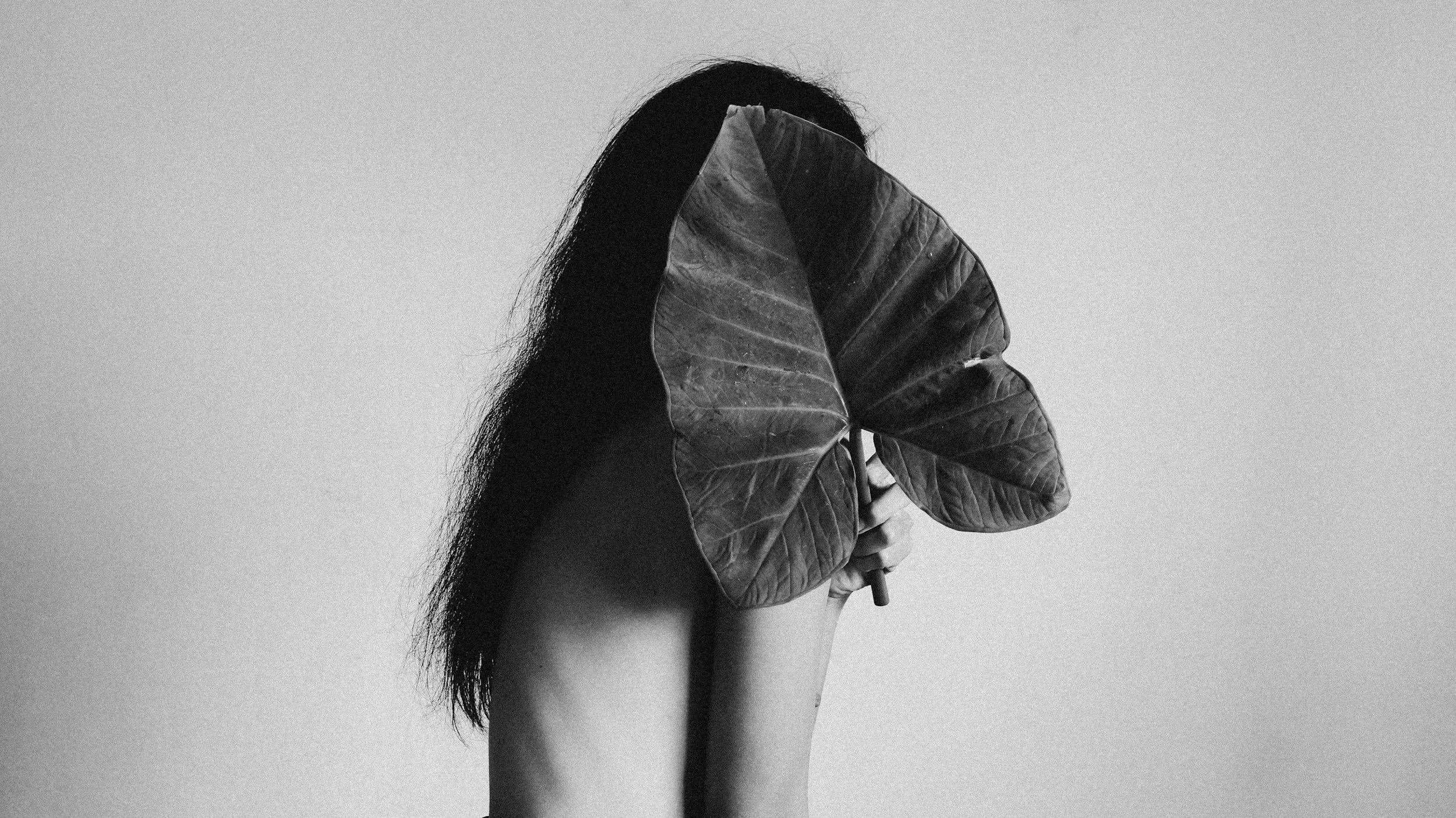
The Soul Beneath Pity
I live in a town by the biggest freshwater lake in the world, and I often witness the juxtaposition of immense beauty and immense despair. Pity tempts me at times.
What is pity really?
Etymologically, pity comes from Old French pité and Latin pietas. Pietas originally meant something closer to dutiful devotion, reverence, and compassion rooted in moral responsibility, devotion to the gods, to family, and to one's obligations and fate. It was not sentimental sorrow. It was reverent participation in the suffering and responsibilities of human life.
Over time the meaning narrowed. Modern pity carries an uncomfortable undertone, "poor you," which is precisely why many people recoil from being pitied even when they want compassion. Pity can subtly remove dignity.
Hidden beneath this modern distortion is something sacred. Pity begins as genuine sensitivity but loses coherence when reverence collapses into emotional fusion or superiority. Modern pity is compassion that has lost its grounding.
Why does pity resemble love while subtly distorting it?
Real love says, "I see your suffering and your dignity at the same time." Pity sees suffering so intensely that the person disappears beneath it. To prematurely rescue, collapse emotionally, or subtly deny another person's capacity to bear their life is to interfere with something sacred unfolding within them. To respect another person's fate is not indifference. It is a form of love mature enough not to interfere with the soul's journey through reality.
Compassion can stand beside suffering. Pity often tries to descend into it, soften it, rescue it, or emotionally absorb it. Paradoxically, this gesture diminishes the other person. When we pity someone, we stop perceiving their agency, dignity, strength, and soul. We see primarily their wound.
The practice is this: "I acknowledge your suffering without placing myself above you, beneath you, or inside your destiny."
Pity also disperses the self. You get pulled into another person's field. The issue is not caring too much. The issue is losing differentiation inside caring. The aim is to remain inwardly continuous while in contact with suffering, and connected to the other human being without abandoning either them or yourself.
Pity often appears when we cannot tolerate helplessness. Then it becomes less about the other person's suffering and more about our own relationship to uncertainty, limitation, and mortality. Pity often hides fear. Something in us recognizes that this too belongs to the human condition. If I pity enough, feel enough, carry enough, perhaps I can avoid confronting the painful truth that I cannot save everyone.
What about self-pity?
Thomas Keating understood the false self not as badness but as the conditioned identity structure we build to secure safety, affection, and approval. Pity appears when the false self organizes around woundedness and grievance after frustration or loss.
Grief itself is natural, cleansing, and human. But self-pity says: "My suffering defines me." In contemplative traditions, that identification obscures deeper presence.
Maurice Nicoll described self-pity as turning one's “psychological country into marshland." Gurdjieff was direct: "Remember yourself always and everywhere."
Compassion is presence. Pity is identification. That distinction matters enormously.
In an earlier reflection, I described invisible diaspora as losing oneself inside fragmentation. Here, I see pity as losing differentiation inside another’s suffering; self-pity as losing oneself inside one’s own suffering; and inward continuity as remaining connected to self while fully acknowledging reality.
The practice is not suppression. It is non-identification, loving awareness, and returning to presence beneath the false self's emotional programs.
Teilhard de Chardin once prayed to recognize the radiance of the Divine in the depths of other human beings: "Grant me now to see you also and above all in the most inward, most perfect, most remote levels of the souls."
I see many people living on the street, some folded into drug-induced states, and others who no longer seem connected to their own physical dignity, as though they had to leave themselves in order to survive what they carry. But the spirit is still alive.
Perhaps that is the movement beneath pity, not away from the suffering of others, but deeper into their dignity, their soul, and their humanity.
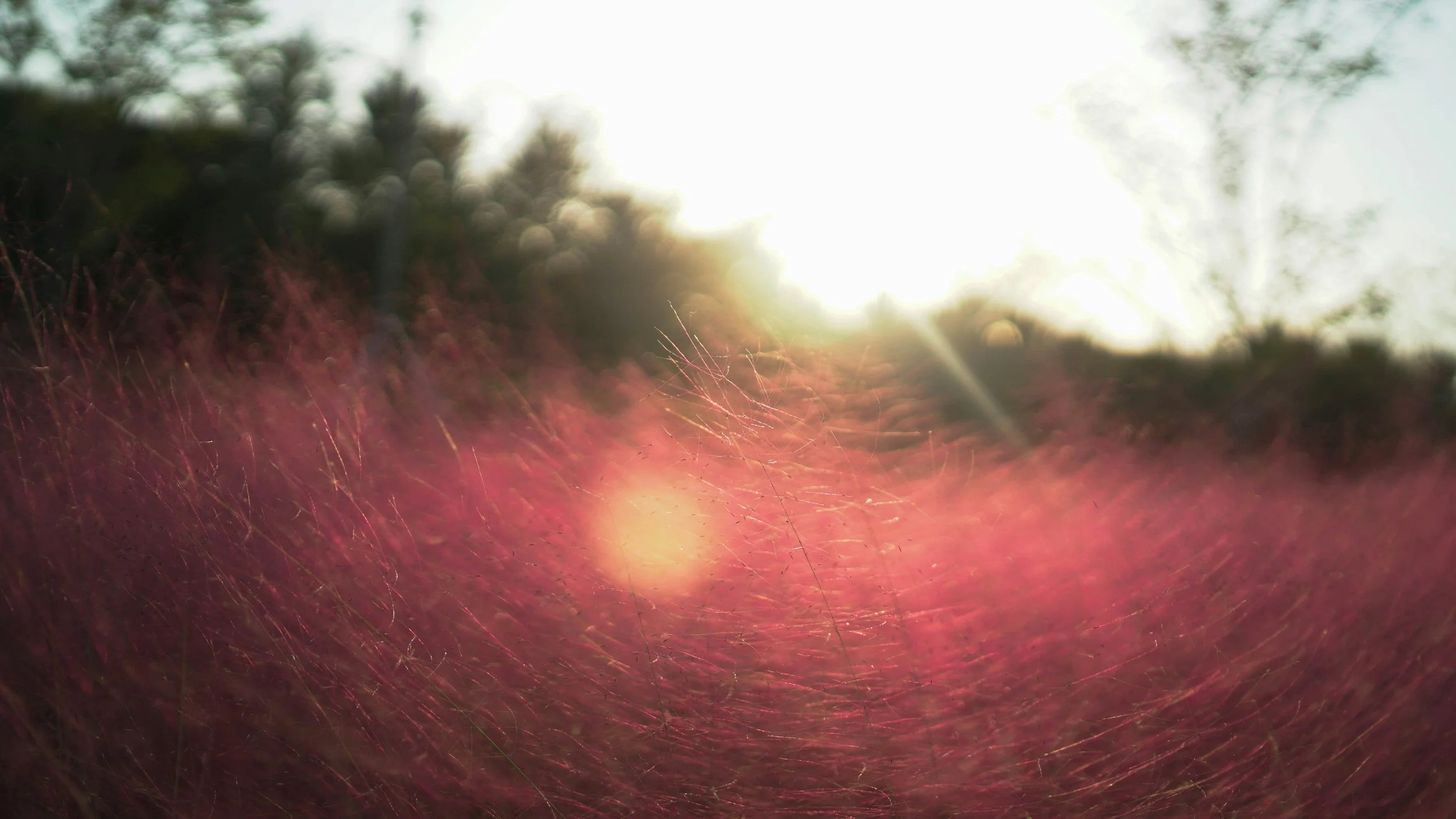
La Vie en rose: A Day of Listening
Yesterday morning I read this quote by Jean Cocteau, “ The poet doesn’t invent. He listens.” I vowed to listen this day, and not only to the sounds and words that come my way, but to all the underlying meanings, and colors, and smells, and feelings.
Sylvia Plath wrote: “Remember, remember, this is now, and now, and now. Live it, feel it, cling to it. I want to become acutely aware of all I’ve taken for granted.”
The sun decided to lead me, and it led me to Dream Cloud, a North Shore Coffee Shop. Yesterday while driving, I was thinking about my favorite winter hat that I purchased during my recent stay in Bulgaria. It disappeared in the last few weeks, so I was reflecting on how it was gone for good. It felt like a chapter closing, but as soon as I walked into Dream Cloud, the owners handed me the hat. They kept it hanging on the wall by the cash register with all the aprons. My enthusiasm was obvious.
It takes losing something and then finding it to feel gratitude and renewed appreciation for that something.
The moment I sat down, my gaze landed on a girl’s t-shirt that reminded me to breathe. I whispered to myself, “Remember, you are in the day of listening.”
On the drive back home, the lake and sky in the various nuances of blue took my breath away. Every time, I am in awe of this masterpiece. That’s the richness of beauty. It restores novelty and aliveness.
Edith Piaf was singing La Vie en rose as I drove along the lake. When I listen to music in a foreign language, I connect less to the words and more to the rhythm and melody themselves. That too is a form of listening, sensing what moves beneath literal understanding.
Back in the house, a hummingbird hovered by the window’s birdhouse. I lingered there for a while, watching the hummingbird hover. They are not calm creatures in the conventional sense, yet their movement is exquisitely organized. Nothing is wasted. Even the hovering, which looks effortless, is actually an astonishing feat of energetic coherence. A hummingbird’s heart can beat over 1,200 times per minute during intense activity. Their wings can also beat around 50–80 times per second, depending on the species. To survive this intense activity, they must enter into torpor at night. Without this daily “mini-hibernation,” they could literally starve overnight.
Perhaps the human journey also requires this rhythm: intensity followed by surrender, movement followed by stillness.
As part of an exercise, I had to listen to a heartbeat. It was both calming and dreadful, but I persisted to sit with the beat of life.
I spent the afternoon with my son and as much as I was immersed in my projects when he arrived, I returned to the present moment and his presence, and really listened to his questions and concerns and dilemmas. It felt good to truly engage with his life.
For dinner we visited a friend who loves animals, and they all show up by her kitchen door for food. Meanwhile, her cat was sleeping in a ceramic bowl on top of the cupboard, totally unbothered by our arrival. She knew how to be present with herself. The two parrots were loudly chirping close by. She showed us a video of a bear that was grabbing her bird feeders a few weeks ago on the front porch, and the mallards that have been regular visitors for three years. Maybe we love animals because they remind us of a more innocent and radiant way of being.
My friend’s house always carries a sense of peace and tranquility. Daffodils rested on the side table beside stacks of books, and a small bouquet sat quietly at the center of the dining table. The art hanging on the walls tells a story of its own. Her meals are always elegant in the simplest way, and you leave with a sense of calm and fulfillment.
When attention and care enter ordinary life, beauty returns, and from beauty love naturally flows.

The Invisible Diaspora
Diaspora is usually understood as the scattering of a people from their homeland, but there is another kind of diaspora that receives far less attention: the scattering of a person from themselves. A dispersal not across geography but across the interior life: attention fragmented; identity split; memory buried. The soul displaced from its own dwelling.
This is the invisible diaspora, and I have come to believe it may be the defining condition of our time.
I know the geographical diaspora from the inside. I left Bulgaria years ago, though left is not quite the right word. I fled. There is a difference.
Leaving implies a choice made from fullness. Fleeing is something else. It is the body moving before the mind has words for why. It is survival dressed as departure.
In America I found what I was looking for, space, room to breathe, the freedom to be more myself. What we flee travels with us, and not as memory exactly. What travels is subtler than memory. It lives in the body, in patterns we repeat without knowing we're repeating them, in what our children absorb before they have language for what they're absorbing.
Bulgaria never left my side. I simply stopped looking at it.
My children grew up without Bulgarian. I tried to teach them, and something always intervened. I understand now that the something was mine. You cannot fully offer what you haven't fully reconciled with. They traveled to Bulgaria with me over the years and absorbed not the country but my ambivalence toward it. The disconnect passed through without either of us knowing.
This is how invisible diaspora moves through families, not through what is said but through what is carried. The unresolved homeland lives in the body of the one who left and travels quietly into the next generation as an unnamed longing, a gap they cannot source.
It wasn't until I returned to bring my mother's ashes back to Bulgaria that something began to shift. I stayed six months. I hadn't planned to, but the past was waiting patiently, and I found myself finally willing to meet it.
That return became a kind of reassembly. What had been left unacknowledged was honored. What had been buried was given air. And something that had been held tightly for decades began, slowly, to release.
Beneath every geographical diaspora lives a deeper longing, the human need to return, not only to a place but to ourselves.
A return to the body, so long abandoned in the rush of surviving and adapting. A return to the soul, whose quiet voice gets buried beneath the noise of becoming someone acceptable in a new world. A return to the land, not necessarily the physical land but the rootedness that land represents. A return to God, to the ground of being itself. A return to relational integrity, to the relationships we left or lost or distorted in the leaving. A return to the inner home, the place within that remains constant regardless of where we live.
Rumi understood this. He was himself a man of diaspora, born in Balkh, displaced across Central Asia, settling finally in Konya. The entire Masnavi, his great thirteenth century poem of the soul's exile and return, opens with the image of the reed cut from the reed bed, crying its separation, longing to return to its source. And he wrote: every cry of the heart is a homesickness, the lover's sigh, the immigrant's backward glance, the unnamed restlessness that follows us into every new life we build. All of it a coded prayer for reunion with the inner homeland.
Yet not all movement is the same. Breath, wind, and spirit are all forms of movement, but they are movements that remain connected to source. They animate, circulate, and gather life rather than fragment it. Diaspora, too, is movement, but often movement marked by rupture, dispersal, and separation from the center. The problem is not movement itself. Human beings are meant to move, evolve, traverse, migrate, transform. The deeper question is whether we remain inwardly coherent while moving through the world.
That is why the word traversal has stayed with me. Traversal implies conscious passage through terrain, not scattering, but movement with orientation. A crossing that retains relationship to meaning and source. As Maria Popova writes about exploration, its payoff is not data but discovery, of unimagined wonders, of yourself in the face of the unimagined.
Perhaps this is the defining tension of modern life. We live in constant motion geographically, psychologically, digitally, emotionally, yet much of that movement disperses rather than gathers us. We are flooded with information, stimulation, identities, expectations, and distractions, but rarely taught how to remain inwardly rooted while moving through them.
Maybe invisible diaspora is precisely this: movement without inner continuity. A scattering of attention, soul, memory, and presence across too many directions at once.
And perhaps all genuine spiritual practice is, in some way, an act of gathering. Not stopping movement, but learning how to move without losing the soul.
There is a paradox worth sitting with here. Physical displacement, painful as it is, can awaken a spiritual depth that comfort and assimilation rarely produce. The person who has lost an outer home is often more awake to the need for an inner one. While those who never left, who assimilated smoothly into whatever world surrounded them, may be living the most complete form of invisible diaspora, exiled from themselves without the displacement that might have made them notice.
There is a particular form of collective diaspora that receives little attention, the severing of an entire culture from its sacred roots. In Bulgaria, as across much of Eastern Europe, decades of enforced atheism under Communism removed God from public and private life. The churches fell quiet. The traditions were suppressed. The interior life was treated as irrelevant or dangerous.
In the West, and particularly in the United States, the severing from the sacred has taken a different form. Not enforced by ideology but by the quiet displacement of interiority through busyness, consumption, and distraction.
The soul is our connection to the Divine, the inner ground from which genuine life flows. When that connection is disrupted, whether by force, by ideology, or by the accumulated weight of modern life, we become displaced from ourselves in the most fundamental sense. The hunger for transcendence does not disappear when its sacred forms are removed or forgotten. It simply seeks other destinations, appearance, achievement, pleasure, consumption, distraction, whatever offers a momentary sense of fullness. This is not a moral failing. It is a human response to an emptiness that was not chosen.
George Gurdjieff observed that most human beings live in a state of inner fragmentation, scattered across moods, opinions, and automatic reactions, rarely inhabiting themselves fully. He called this sleep, and it is not the sleep of the night but the sleep of the unlived interior life.
This is the invisible diaspora, and it requires its own kind of return.
The return from invisible diaspora is not a single event. It is a practice. A repeated turning back toward what has been scattered: the body, the soul, the inner ground.
It begins with honest seeing. Recognizing where we have fled and what we have buried. Acknowledging the places we disconnected from, in ourselves, in our families, in our traditions, not with self-criticism but with the same patience we would offer anyone who survived by the only means available to them at the time.
And then, gradually, the returns begin in small honest movements toward what was left behind.
The inner home was never lost. It was only left unvisited for a long time.
Perhaps that is what all genuine inner work is; the long journey back to a place we never fully left.
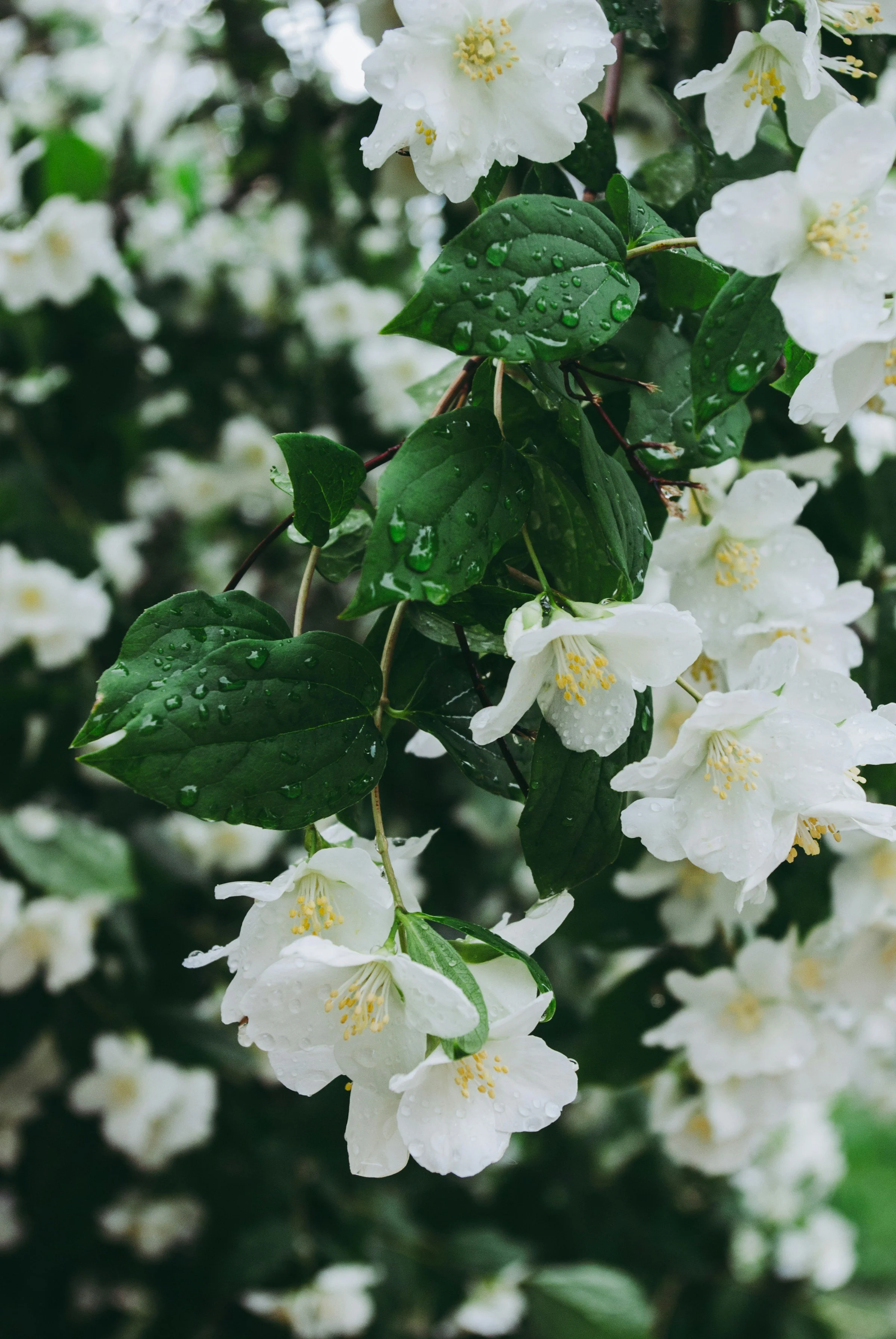
The Fragrance That Survived Ordinariness
We hold our mothers to the standard of God. We expect from them unconditional presence, perfect love, the ability to see us fully and never fail us. When they cannot meet that standard, as no human being can, something breaks between us. It doesn’t happen all at once, but in the small accumulations of disappointment and distance.
My mother devoted her life to beauty. She showed up beautiful. She touched her environment with beauty even through the simplest gestures. She made cakes and elaborate dinners and created around others the feeling of something almost transcendent. Beauty was her language and her offering.
Yet, something stood between us. The standard I held her to, higher than any human could bear, created a coldness in me that I carried for years. It was a distance I could not close, and a sadness we both carried.
Bert Hellinger, the founder of Family Constellations, said something that landed in me like a key turning in a lock: we hold our mothers to the expectation of God, and they are ordinary. The work is to release them from that expectation.
When she became ill, I felt sadness, but also a distance I could not name. I understand it now. Somewhere in me, I had placed her too close to the position of God, expecting from her a kind of unconditional wholeness no human being can sustain. But my mother became fragile, ill, and unmistakably human. And I was not fully ready to meet the woman her illness revealed.
To release my mother from the standard of divinity is not to diminish her. It is to finally see her, the woman she actually was: ordinary and extraordinary simultaneously; limited and generous; imperfect and beautiful.
The jasmine plant itself is unremarkable: a simple vine with small white flowers, nothing dramatic, but the fragrance it releases travels further than the flower ever could. You receive it before you find its source. It reaches you invisibly, carried on air, and asking nothing.
My mother loved flowers and beauty. That love pressed through everything she made, offered, and created. I carried it without always knowing it. It became part of my own pursuit of the good, the true, and the beautiful, shaping how I move through the world.
To see her ordinariness now is to feel her closer. The coldness drops. The superiority drops. What remains is simpler and more real: a woman who loved beauty and passed it through, imperfectly and faithfully, in the only ways she knew.
This Mother's Day I am not celebrating an ideal. I am honoring a human being. My mother, ordinary and irreplaceable. The jasmine fragrance that traveled further than she knew.
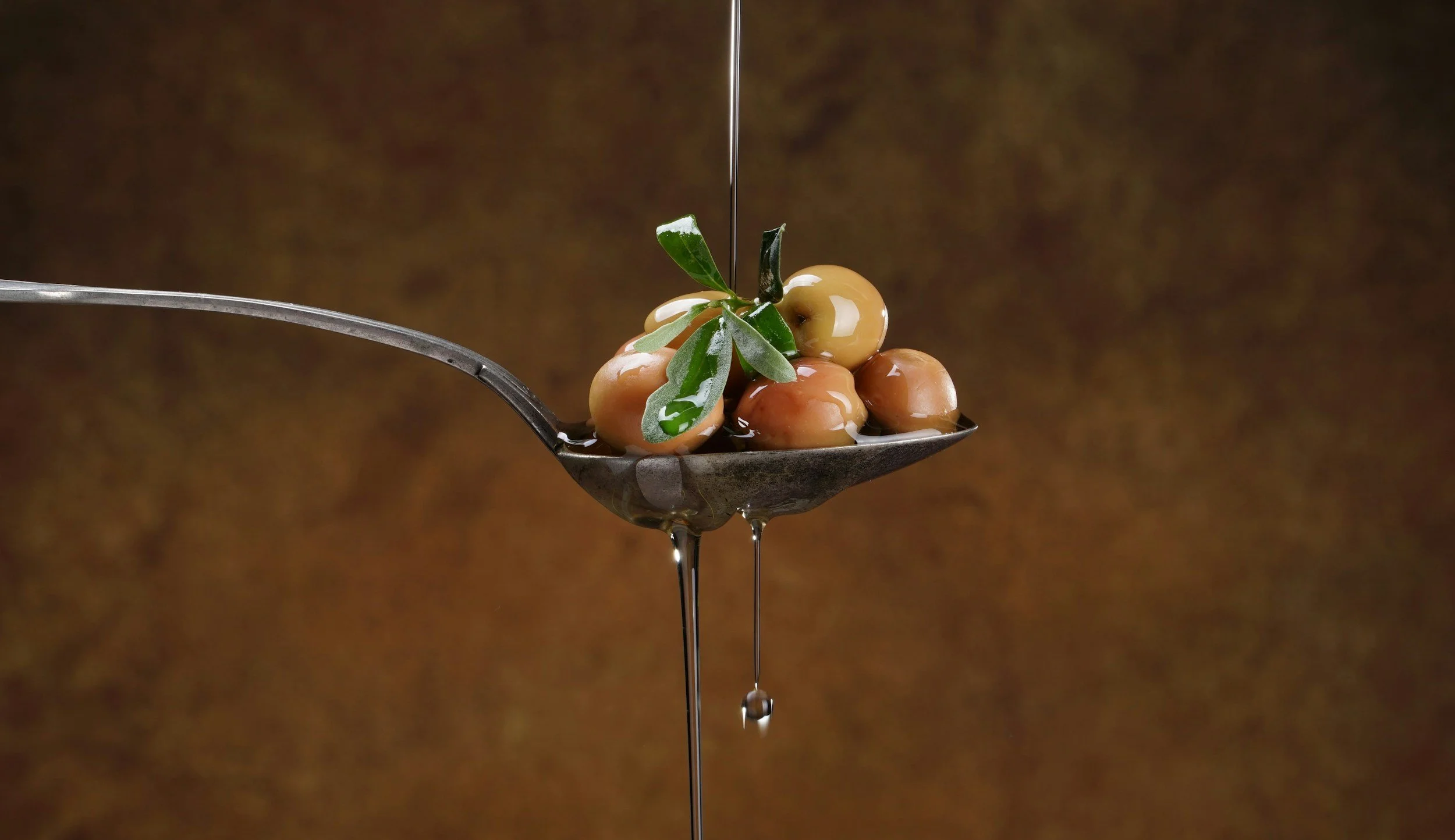
The Pressing of the Olive
If we truly desire to grow and change, we must be willing to suffer consciously.
But what does conscious suffering actually mean?
Conscious suffering is not the deliberate pursuit of pain, nor the creation of circumstances that predictably produce suffering.
G. I. Gurdjieff distinguished sharply between what he called unnecessary suffering and intentional suffering. Most human suffering is unnecessary, the mechanical, repetitive pain produced by our sleep, our identification with moods and opinions, our inability to separate from what happens to us. This suffering produces nothing. It simply recycles itself endlessly, consuming energy without transformation.
Intentional suffering is something entirely different. It is the conscious, voluntary acceptance of friction, the deliberate choice not to express negativity, not to escape discomfort, not to identify with what pulls at us. It is suffering used rather than suffered mechanically.
Gurdjieff taught that the development of the body of essence requires three kinds of food: ordinary food, air, and impressions. Impressions become nourishing only when they are received consciously rather than mechanically.
Conscious suffering is the practice of receiving life, including painful impressions, with awareness instead of automatic reaction. In this way, suffering becomes material for inner development rather than repetition.
In Gurdjieff's cosmological language, he spoke of intervals in every process where energy naturally dissipates and movement stops unless something additional is introduced. In human development that additional shock, the thing that keeps the process moving through the interval, is often intentional suffering. The willingness to keep working on oneself precisely when it is most uncomfortable and most tempting to stop.
Gurdjieff was specific about what intentional suffering means in practice. It involves the conscious restraint of negative emotion, not the suppression of feeling, but the refusal to express negativity mechanically and automatically. It also includes what he called voluntary suffering, the willingness to take on difficulty consciously rather than avoid it. P. D. Ouspensky described another aspect of this work as non-identification, maintaining a thread of inner awareness even when circumstances pull strongly toward reaction and sleep.
The purpose of conscious suffering in Gurdjieff's teaching is not asceticism or self-punishment. It is crystallization, the building of something permanent and real in the human being that ordinary comfortable life cannot produce. For example, olive oil only flows when the olive is pressed. The pressing is not violence against the fruit. It is what releases the fruit’s deepest essence. The oil was always there. The pressure simply reveals it.
Conscious suffering is not the forging of something hard. It is more like the pressing of the olive. The essence, the light, the capacity for transformation were already there. The pressure simply releases what could not flow freely before.
Peter Brook’s statement captures it beautifully, “There is a joy in quality found and a suffering in quality betrayed, and these two experiences become the motors that constantly renew our search.” That's intentional suffering understood through the lens of artistic and human quality. The suffering of betraying what you know to be true is not wasted if it renews rather than defeats the search.
In my own journey, during the early stages of my awakening, I experienced profound suffering. At times, I felt almost incapable of moving forward. The intensity was deep in my body, and there were moments when I felt small, powerless, and exhausted by the weight of it. But through grit, persistence, and love, the suffering itself became material for the building of essence.
Over time, I began to understand that conscious suffering is not opposed to joy or to fully living life. It is what allows life to deepen rather than remain mechanical. Something softer, more spacious, and more alive emerges through the willingness to remain present to what once felt unbearable.

Body of Essence
Julian Huxley wrote, “The human person is nothing else than evolution becoming conscious of itself.” Pierre Teilhard de Chardin insisted that evolution is a path toward the purification of consciousness and that it demands wholehearted involvement. He also wrote, “The peak of ourselves, the acme of our originality, is not our individuality but our person. According to the evolutionary structure of the world, we can only find our person by uniting together.”
We are always searching for something outside of ourselves to complete us and fill the void that reverberates within. Our creativity in this search is endless. Yet, what I have witnessed and experienced is that only a return to our Divine Nature brings fulfillment. That Nature asks us to give ourselves, to God and to the unity of life in love. Moving the ego aside does not dissolve our essence. It strengthens it.
This is what contemplative and esoteric traditions describe as the body of essence, a second body that does not develop automatically but through conscious participation in life. It begins to form when a person chooses, again and again, not to be governed by the past, but to respond from the present toward what is emerging.
Mechanical life binds us to repetition, with the past recycling itself through us. The development of essence, by contrast, is a turn toward the future, a willingness to become rather than to repeat. Over time, this gives rise to what has been called the resurrection body, not a return to what was, but the fruit of a life lived in conscious alignment with what is not yet.
Beatrice Bruteau wrote in an essay, “To be "in Christ" is to be identified with the Living One who is not to be sought among the dead, for the Living One is the One who is coming to Be.”
The human person participates consciously in the evolutionary process. We are co-creators, so it matters what we are becoming. To step out of the past, we must forgive. Forgiveness is the act of making a new future. To be alive is to begin again, again and again.
The human person is not a fixed entity but something continuously emerging, being called forth, becoming. Personhood is participation rather than possession.
What has been lost becomes the very ground from which the future presses forward. Love that has nowhere to go is not wasted. It becomes the very shell through which life breaks forward.
At first, we are body and essence, with only fleeting moments of contact between the two, brief recognitions of something deeper within us. The path forward is a gradual permeation, an inner osmosis, through which essence is no longer something we visit, but something we begin to live from. Through sustained and often difficult participation, we are gradually shaped into the body of essence itself.
In my own life, I have learned that the only way forward is the turn toward God. Life presses forward, breaking through its own shells. This requires honoring the past while releasing its hold through forgiveness, both of myself and of others. It asks for trust in the quiet sense that I am always being shaped and renewed.
Recently, through participating in my own family constellation, I recognized the loyalties I was holding toward my ancestors. In order to live fully, I had to realign with life itself. Life moves forward like a river. When it is resisted, it becomes blocked. I am grateful for the gift of life, and I commit to participating in its movement.
Peter Brook wrote, “There is a joy in quality found and a suffering in quality betrayed, and these two experiences become the motors that constantly renew our search.”
We are capable of developing a body of essence, a resurrection body, through conscious suffering and love. This requires a quiet but radical consent, a “yes” to serving something greater than ourselves.
In each moment, we participate in what we bring into the world. We can perpetuate resentment, pride, and division, or we can generate gentleness, patience, and peacefulness. Our lived experience, felt, endured, and transformed, becomes the very substance through which essence is formed.
This path does not ask us to withdraw from life, nor to lose ourselves in it. Rather, it asks for a right relationship, to enjoy what is given without escaping our aim, and to remain conscious without hardening into spiritual pride.
This is the path each of us walks in our own way through love, through grief, through the moments when we choose life over the pull of the past.
How can we make the whole Earth our Altar?
To make the whole Earth our altar is not an idea but a way of living. It is to recognize that each moment asks something of us: to offer our reactions, our wounds, our love, and our attention into the fire of becoming. It is to forgive, again and again, so that the future is not suffocated by the past. It is to allow even our suffering to become material for transformation rather than repetition.
The altar is not somewhere we go; it is what the world becomes when we consent to participate consciously in Life. Perhaps, this is what it means to be human: to stand at the threshold of what has been and what is coming, and to offer ourselves so that something new may be born.

What Is It to Be a Human Being?
As AI continues to evolve, it becomes increasingly vital that we transform human consciousness itself, so we can meet it as intentional stewards of an emerging world. The moment is real. The cost of remaining adrift or absent has never been higher.
What is needed to step into our humanness and divinity in the same breath?
Our personality is a disguise. Essence is what we really are, but the path from one to the other is conscious work. When personality is our master, we are living in rigid prisons and the limits are prescribed by societal norms. Only essence has genuine freedom.
As Anaïs Nin wrote, “Life shrinks or expands in proportion to one’s courage.” Courage is required — to show up day in and day out and observe our thoughts, beliefs, actions, biases, upsets, and reactions, and bring love and kindness to these hurt places. The journey is long and treacherous. It requires grit and tests your faith until you surrender into complete trust.
And as the etymological meaning of courage is of the heart, we need to involve the heart and the body, not just the mind. We need three-centered awareness. Thought, feeling, and sensation must be brought into relationship. That calls for practice because we naturally lead with one of these centers.
As D.H. Lawrence wrote, “The human soul needs actual beauty even more than it needs bread.” Beauty is essential. We gravitate toward the aesthetically beautiful — spaces, places, people — and beauty summons love. To create beauty, we have to put effort and care into our environment, our souls, our food, our neighbors, our art, and much more. What we digest and produce is of utmost importance.
At the personality level, we see each other as victims or perpetrators. At the soul level, we are capable of pure, nonjudgmental, non-punitive love and self-responsibility. We seek to understand and heal through love.
Purity is not perceived as moral perfection but as a transparency of the soul. Nothing is hidden, forced, or twisted. We are able to reflect truth without distorting it.
Most human beings live far below their actual potential through the absence of genuine development. The Divine Individual has developed genuine will, genuine consciousness, genuine being, not as a spiritual achievement, but as the fulfillment of what a human being actually is when fully realized. In practice this means the capacity to choose freely rather than react automatically, to see clearly rather than through the fog of conditioning, and to act from one's deepest nature rather than from habit or fear.
To be a human being we have to be aware of what we are doing; be aware of others objectively; be aware of an open future; remember our true essence. It is a process, and it calls for patience and commitment. The guarantee is that there is an exit from every closed circle, from all captivity of the spirit.
Jesus himself reminded us: “I am the Door; if anyone enters by me, he will be saved, and will go in and out and find pasture.” (John 10:9)
To ground these reflections, I continue to work at these steps. I bring awareness to everything I do in daily life, especially in relationship to others. How I show up is my duty. I see the world as a mirror that reflects me, not from an egotistical perspective, but from a self-responsibility one. That practice naturally creates awareness of others and opens space for less blame and more love.
I regularly run into my attachment to outcomes, fantasies, and emotional yearnings, and diligently submit them to God. I keep an open hand to what the future holds. To remember my true essence, I stay close to my philosophy and its main tenets: the pursuit of the good, the true, and the beautiful.
It is worth mentioning that we have to learn to live in paradox: effort and surrender; will and grace; doing and being. These are not problems to solve, but tensions to hold consciously. Something else can enter when we do not collapse to one side, a third movement, subtle but real, that belongs to the soul. It does not erase the tension, but transforms it. It appears in the space we create through attention.
This is called the journey of the Hero and the Heroine for a reason. It tests your limits again and again, refining what is real. But once you truly taste it, there is no turning back into unconsciousness.

Love in a Different Language
I've never been "lovey-dovey." I am not naturally expressive or overflowing. For a long time, I wondered if that meant something was missing. The truth is my experience of care is not shallow. It's steady and watchful. Contained.
I don't always say the warm thing. I have been labeled cold and direct. I don't always show it in ways people easily recognize, but I notice. I reflect. I stay. I hold.
When did we decide that love must be visible to be real? That softness must be performed to count?
There's a kind of affection that lives beneath the surface. Not absent, not guarded. Just unadvertised.
Maybe the real question is: Can you recognize love when it doesn't look the way you expect?
Most people carry an unspoken template for what love should look like: warm tone, frequent affirmation, emotional openness, visible softness. When love shows up outside that template, it often gets missed.
Someone may show love through consistency, always there, not verbalizing much. Another through precision, remembering details, anticipating needs. Another through truth-telling, challenging instead of soothing.
If you're expecting warmth as expression, you might not register warmth as presence.
Love has more than one language. Not all of them are fluent in display.
I'm not learning how to perform warmth. I'm learning how to trust the form it already takes in me.

Fairness
Leave it to our places of employment to take us on downward spirals.
I left the university almost a year ago, and I still feel the aftereffects. One image, one subtle reminder, and I am right back in that familiar place, feeling unseen, undervalued, unrecognized. Of course, I know these moments act as mirrors. So I turn inward, almost instinctively now. Yet, some part of me still feels unseen, unrecognized, unappreciated.
I meet her there.
I give her all the love I can summon and gently hold her hand as I tell her: I see you. I value you. You are worthy. You are enough.
Peace comes. It always does.
And yet, something in me still wants to understand: What is fair anger, and what is simply a mirror? Can they coexist?
Originally, fairness was closer to beauty and harmony than to strict justice. Only later did it become tied to equality, impartiality, and ethical treatment. Embedded in the word is an older intuition: what is truly fair is not only just, it is also fitting, balanced, even beautiful.
If you pursue beauty as if your life depends on it, you begin to sense when something strays from it.
So what do we do in those moments? Do we rush in to correct the imbalance? Or do we run away from it as fast as we can?
My intuition says: neither. You return to yourself. By restoring balance within, you step out of both victimhood and escape. That, in itself, is a beautiful movement.
But another question remains: If fairness implies impartiality, how do we remain outwardly neutral while something churns within us? We restore peace internally. That is the only place we have real agency, how we show up for ourselves.
So when something arises and brings me back to that familiar feeling of powerlessness, I try to meet it differently. I name it: There is anger within me. (Not: I am angry.) This distinction matters. As long as I do not identify with the anger, I am already moving upward. Identification gives the feeling force. Yes, a part of me feels anger, but it is only a part. It is not the whole. That part does not need suppression. It needs recognition. It needs love. It needs beauty, and wherever there is beauty, love follows.
When I move through this process, something shifts. What once felt like a trigger becomes a return. A remembering.
And sometimes, I even feel gratitude. Not because everything that happened was fair in the worldly sense, but because everything can be met in a way that restores wholeness.

Is Love Always Here?
You know those moments when your whole body is triggered by someone’s obliviousness to your defensive, unloved parts?
You feel the fire rising.
You hear your voice rising, the accusations coming through.
You are both the Observer and the Observed, and yet you can’t stop mid-track or retract what is already escalating.
At this juncture, your best choice is to walk away and sit with that little girl who showed up hurt, and to love her dearly, despite her behavior and in spite of her tantrums.
Love is always present. Always in the background and in the foreground at the same time.
In these heated moments, she feels far and unavailable, but it is just a matter of softening the resistance and opening to even a sliver of her presence.
She needs very little:
a softening,
a deep breath,
a gentle invitation,
an exhale.
As soon as she steps in, even slightly, the light shifts.
The heart softens.
The charge begins to dissolve.
Love is always here. We simply return to her.
She is devoted.
She listens to our rhythms.
She respects our readiness.
Give to her.
Receive from her.
Love is always yours.
She never leaves, only waits for you to turn back.

Worry Me, Worry Me Not
I worry so much lately. I meditate, chant, pray, love myself, receive love, and still worry. It is much better than it used to be. I have explored many therapeutic modalities that have softened its arrival and presence, but she still visits me regularly. Through Family Constellations and my daughter, I recognized that it was ancestral. My grandmother carried the world on her shoulders- just like Atlas- always worried, anxious, bracing for disaster. I understand her origin and the path forward and still struggle to let her go once and for all.
The word worry carries the meaning of twisting and tearing, and of choking and strangling, and that’s exactly how I feel in her grip.
A couple of days ago, I kept telling a friend how calm I feel regardless of all the transitions and uncertainties I am moving through. I believed it and felt it in the moment, but I was tested by my son and another friend. They were all coming from a loving place, but they were inviting anxiety into my reality. I didn’t “bite” in the moment, but after several of these invitations, I broke down. She entered my body with a force. All my hope, determination, and perseverance evaporated. I felt delusional to trust so much in the unknown. The practicality of life was summoning me. It was asking me to bow and submit to the tangible reality. “I need money. I need a home. I need a regular paycheck. I need stability. These lofty dreams are realized only by the chosen. Slow and steady takes time and doesn’t pay the bills.” I was bombarded with these messages and called a friend to seek validation. Everything I knew about these states and how to deal with them, I no longer knew.
As the word carries in its definition, I woke up with a pinched nerve in my neck, acute pain in my recently strained arm muscle after an ice fall, and nerve tension traveling throughout my whole body. It was a bodily freeze. Negative states such as worry, fear, anxiety, or depression represent themselves in the muscles by contraction, weakness, and rigidity. I was a ball of nerves literally and metaphorically, and in that state I could only look for ways to relax and care for my body. Everything else was useless.
Paradoxically, negative states are less able to visit when we are in a state of relaxation. That’s why it is advised to practice relaxing daily by noticing the body and giving it the loving attention and care it needs.
Worry is a state of identification. It is thought mixed with negative imagination. The mind is driven by the emotional centre and is obscured. Worry drains us of our life force. There is no centre of gravity. Everything is in disorder. The emotional centre takes over the intellectual one which affects the moving centre, and our whole being is in disarray. Worrying is a mechanical reaction, and it only makes sense that it will affect the machine— it stops functioning properly.
Once there, how do we fix the machine? Simply, by being less of a machine day in and day out. Life will test us, and we can’t change it, but we can change our reaction to life. When a negative emotion arrives (for it will), we are invited not to identify with it and take it as true, and not to try to work on it only after it has fully formed. Freedom is not that worry disappears forever, but that it can arise without becoming the ruler of the house. The mind, heart, and body can breathe freely. That’s expansion!
Admittedly, it is easier said than done. I ask myself why regularly. The reason is that by letting go of worry, we let go of a whole system of “I”s that are organized around it.
We are a multitude of “I”s. Some collaborate with each other, and others have never met. Certain “I”s have built their entire identity around a particular form of suffering. The worrying “I” has organized itself completely around worry. It knows how to worry. It is competent at worrying. Worry is its home territory, its area of expertise, its reason for existing. When you are not worrying, that particular “I” has no function. It ceases to exist.
And “I”s, like all structures, resist their own dissolution.
The “I” that suffers from fear of failure has been with me for a long time. It knows the fear intimately. It knows exactly which thoughts to generate, which scenarios to construct, which memories to surface to keep the fear alive and vivid. It is extraordinarily skilled at its particular form of suffering.
And here is the uncomfortable truth: that “I” gets something from the suffering. Not pleasure in any ordinary sense but existence, identity, continuity. As long as we are worrying, the worrying “I” is real, present, powerful. The moment the worry dissolves, so does the “I” that is built around it.
The fear of not succeeding “I” calls up the self-doubt “I”, which activates the not-worthy “I”, which summons the what-will-people-think “I”, which reinforces the I-should-have-done-more “I”. They form a constellation, a self-sustaining ecosystem of suffering. Each one feeds the others. Pull on one thread and the whole web vibrates.
This is why willpower alone cannot dissolve these patterns. You cannot simply decide to stop worrying. The system is too coherent, too self-reinforcing, too skilled at regenerating itself.
The work is not suppression by pushing the suffering “I” down by force. That simply drives it underground where it operates invisibly.
The work is awareness. Seeing the “I” clearly, in the moment it arises. Recognizing: this is the worrying “I”. This is not me. This “I” has arrived and is currently running the show. I can observe it without being it. Without identifying with it.
And here is the grace in it: the observing “I” does not suffer in the same way. It can hold the worrying “I” with something closer to compassion than identification. It sees the worrying “I” as a frightened, competent, well-intentioned part of the system that genuinely believes it is protecting me because it is. The fear of not succeeding “I” arose originally as protection for me. It was trying to keep me safe from disappointment, from humiliation, from being seen and found wanting. It was doing its job.
The work is not to destroy it with contempt but to see it clearly enough that it loses its grip. To say to it gently, without drama, “I see you. I know what you are doing. And I am not going to let you run the whole house today.”
The paradox
If the suffering were purely unwanted, I would simply stop. The fact that something in me clings to it, returns to it, finds it strangely familiar and almost comfortable that is the “I” speaking. That is the system protecting itself.
My body this week — the tension, the nerves, the ball of suffering traveling through my limbs — is those “I”s made physical. The worrying “I” does not stay in the mind. It descends into the moving center. The constriction, the flexion, the weakness — this is what a system of “I”s built around fear looks like when it takes up residence in the body.
I woke up feeling I needed to write this post, partially to synthesize my learning but also to share. Upon reflection, I recognized that worry and trust cannot coexist. During my recent visit to Benburb Priory in Northern Ireland, I picked a prayer card with the image of Jesus emitting light from his heart. The words underneath his image say, “Jesus, I trust in you.” I keep it as a reminder visible on the living room table. While still in bed and pondering, the image returned to me. Shortly after, I got up, sat on the couch, and opened a book of prayers. I do this daily and randomly.
Today’s message was, “I am all around you, like a cocoon of Light. My presence with you is a promise, independent of your awareness of Me. Many things can block this awareness, but the major culprit is worry. My children tend to accept worry as an inescapable fact of life. However, worry is a form of unbelief; it is anathema to Me. Who is in charge of your life? If it is you, then you have good reason to worry. But if it is Me, then worry is both unnecessary and counterproductive. When you start to feel anxious about something, relinquish the situation to Me. Back off a bit, redirecting your focus to Me. I will either take care of the problem Myself or show you how to handle it. In this world you will have problems, but you need not lose sight of Me.” (Luke 12:22-31; John 16:33)
Today, I am learning not to fight worry, but to see it, soften, and trust beyond it.

Led by the Good, the True, and the Beautiful
I am sitting with the wisdom of the 1st Letter of the Major Arcana— the Magician. It all starts here: a consciousness without effort; the work that feels like play; the carrying of the easy burdens and the rendering of the heavy ones light.
“He who sees the beauty of that which he recognizes as true cannot fail to love it, and in loving it the element of constraint in the duty prescribed by the true will disappear: duty becomes a delight.”
I love Beauty! Beauty generates love- and it stretches beyond the physical. It is the spiritual, emotional, intellectual, and metaphysical one. There is another key element in the above quote: trueness.
The Magician warns and graces. The former is the path which leads to charlatanism. The latter is the path that leads to goodness, trueness, beauty.
As I see it, there are actually three paths:
The Charlatan’s trap: Most charlatans are not consciously lying. The trap is working from the surface rather than the depths, which is performing spiritual knowledge rather than embodying it. Offering what sounds true rather than what has been truly lived.
Some of the signs are needing to impress; claiming more certainty than we actually have; using spiritual language to elevate ourselves rather than serve others; performing wisdom rather than practicing it; acting from the desire for recognition rather than genuine care. The antidote to the charlatan’s trap is silence, humility, and genuine inner work continued in private. As long as what we offer publicly is the overflow of a genuine interior life and not the performance of one, we are on the Magician’s true path.
The Genius (the True Path): Works from a place that is larger than ourselves. The work flows through us. We are genuinely surprised by what emerges. There is a quality of receptivity. The concentration without effort means that the ego is not the source, only the instrument.
False Humility (the most subtle trap): It feels virtuous. It uses the language of smallness to avoid the genuine risk of showing up fully. It says, “Who am I to offer this?” as a way of staying safe. It is the ego protecting itself through apparent selflessness. I tackle this trap the most. My personality pulls me into my doubts and inadequacies right when I feel ready to release something into the world; I fall into this pit briefly. With time and practice, it gets softer- the descent and the return, but I have to be vigilant.
What I have learned is that we cannot resolve this tension once and for all. The line remains thin. The vigilance must remain alive within us. The contemplation practice is the work. If we live with the discomfort of not being entirely sure which side we are on at any given moment, we will almost certainly be closer to the genius than the fraud. The charlatan has stopped feeling it and is comfortable. The false humility has found its groove and settled in. The genius questions and digs deep. The depth is not a problem to be solved. It is the path itself.
Follow what you find beautiful. It knows where it is going.

The Open Hand
I picked up Meditations on the Tarot this afternoon. The letter of the Chariot found me — the appearance of triumph, the appearance of control. The Chariot carries both warning and grace simultaneously, and presses a question underneath the image of triumph: whose victory is this, and in whose name?
The temptation to mistake spiritual advancement for personal power, to act in one's own name rather than in service of something larger is the shadow the Chariot carries, and it is closer than we think.
A true mastership is acquired in solitude. The inner victory of the renunciation of desire because not grasping is what sets genuine transformation in motion. It is about becoming a vehicle for divine movement through the three sacred vows:
Poverty: freedom from attachment to results, detachment, kenosis.
I experienced it this morning. My mind was feverishly creating project after project, hungering for expression and some realization in the world. Then, I suddenly felt it in my body- the tightening, the mild anxiety sneaking in, the catching of my breath. The conditioned need for productivity and achievement was present. I was planning a retreat— beautiful, real, full of genuine vision. Something in me grew uneasy. Not because the vision was wrong but because the timing was forced. The knowing that I have to release it arrived. Not never, but definitely not now. The relief came when I let it go.
This is poverty in its esoteric meaning. Not deprivation. The open hand. The soul that holds its work lightly enough that grace can move through it.
I didn't lose the retreat. I returned it to its right time.
Chastity: integrity of attention- the refusal to scatter yourself across too many objects of desire.
Hearing my soul’s direction and not jumping into too many initiatives at once. Retreats, circles, outreach, book, Instagram — all pulling simultaneously. The body's quiet knowledge that scattered attention is a violation of something.
Chastity as inner fidelity. Not restriction but faithfulness to my own deepest direction. The soul that knows what is mine to do right now and protects that knowing.
The relief of simplicity is chastity recognizing itself.
Obedience: listening before acting- the contemplative's fundamental practice.
Ob-audire (latin) — to listen from underneath. Not obedience to an external authority but to the deeper current of what is actually being asked.
The willingness to be responsive to what is actually being asked of us rather than what our will, our fear, or our ambition is projecting onto the situation.
The fear pit visited three times today. Each time, something paused before reacting. Something listened underneath the fear and heard a different instruction than the fear was giving.
Before I acted, something in me listened. That listening was the vow.
Poverty says: “I hold the outcome lightly.”
Chastity says: “I give my deepest attention faithfully to what is mine to do.”
Obedience says: “I listen before I act.”
Any genuine transformation in the world and in ourselves requires all three.
To return to the image of the charioteer- there is no gripping of the reins. The movement forward is not conquest. It is responsiveness: the open hand, the faithful attention, the deep listening working together.
This is what genuine spiritual work looks like from the inside. Not triumphant. Not forceful. But moving — steadily, rootedly, in a direction that is not entirely our own choosing.
The chariot moves. But we are not driving it alone.
"Those who are humble have definitely seen and heard — they have had a mystical experience with God." — Valentin Tomberg
Where in your life right now are you gripping the reins? What would the open hand make possible?

Fully Human/Fully Divine
Sometimes, I feel upsets potently but don’t always realize what message they carry until I sit down and feel my feelings. I look into “the mirror” genuinely and recognize what is happening underneath the surface reaction.
Humans are powerful mirrors, especially the ones we care about most. I recently noticed that my love toward people appears to increase or decrease based on their behavior or state of being. My reactions are strongly tied to my historical traumas and hurts. When I mirrored that, I sensed that my love toward myself is also dependent on the way I show up.
I clearly love my Divine Self wholeheartedly, but show up with judgement toward my Human Self, and then I feel the split. My life oriented toward the Divine some time ago, and since then I have tried to live in truth, in love, in consciousness. Yet, my human personality still contains remnants of old emotional wounds, habitual reactions, fears, and conditional responses.
Somewhere along the way, the “spiritual judge” was born. An inner voice that whispers, “You should be beyond this.” It appears when anger or fear arise, jealousy shows up, or old wounds get triggered.
I felt it recently. Someone I love was present with me, and something small, a tone, a look, a barely-there signal, triggered an old story. Within moments I was edgy, snappy, unreachable. I couldn't find love for them, and I didn't like myself much either. The spiritual judge arrived immediately: "You should be beyond this by now." And underneath that — shame. A feeling of being dirty, unkind, small. It wasn't until I sat quietly the next morning that I could see what had actually happened. The trigger had nothing to do with them. It was history speaking. And the harshness I felt toward myself — that was the same split I'd turned outward.
In this pursuit of raising my consciousness, the personality is not meant to be destroyed. It is meant to be seen, understood, and gradually harmonized. The upsets are the material on the path, not the obstacles. Without them, there would be nothing to transform. Mary Magdalene, in the gospel that bears her name, understood this: the spiritual path is not escape from our humanity but its transformation.
My Divine Self acts like a caring parent. It brings awareness and compassion to the Human Self. Noticing the split is a doorway. Seeing it clearly allows it to gradually heal and unify.
Seeing+presence →transformation
Judging →tightening+constriction+fragmentation
We are both Fully Human and Fully Divine, and it is a process to integrate this reality. Offering ourselves compassion, forgiveness, and unconditional love along the way is the way forward and the way now.
Perhaps the path is not becoming something other than human, but learning to love the human we are becoming.

Love is Stronger Than Death
A reflection one year after my mother’s passing
“Blessed are those who mourn, for they shall be comforted.”
— Gospel of Matthew 5:4
Today marks one year since my mother died after six years of battling cancer. During the final month of her life, I happened to be reading Love Is Stronger Than Death by Cynthia Bourgeault. Looking back, I believe it was the book God placed in my hands to carry me through those days.
I still remember the day she died vividly—the priest who helped us both, the exact moment her soul left her body, and the strength I felt. God was enfolding me in His arms.
My mother was a strong woman, always moving through life with determination and zest. We had our moments, and many times we acknowledged how different we were, but she was always there for me. Always. She showed up for the people she cared about relentlessly. I would go on a work trip and come back to a cleaned bedroom, folded laundry, and my favorite meal. She expressed her love for others through gestures and gifts.
I remember her last Christmas. By then she was in hospice, hardly mobile, but she found a way to engage with the activities coordinator and create a handmade gift for me. It was touching and beautiful. This woman could hardly walk sometimes, yet she would still make cakes for others. We tried to find humor in the small moments—like her making us a coffee cake with cayenne pepper, or burning the pots while making stew because she completely forgot she was cooking.
My mother was very feminine. She insisted on putting makeup on and dressing up every time she went out. Even though the cancer and treatments took much of her energy and mental lucidity away, she still tried. I remember during the last month of her life, I brought a very close friend to visit her. She quickly reprimanded me for not telling her ahead of time, so she could dress up and fix herself. By then she wasn’t leaving the bed unassisted and was mostly sleeping and very confused, but this spark for life kept her alive longer than anyone expected.
She loved her plants and flowers, tending to them with the same care she gave to people. Somehow, they thrived under her hands and seemed to bloom in gratitude, her love returned to her in every leaf and petal.
She also loved photographs. I was surprised that she would ask people to take photos of her even when she was already very sick. Somehow summoning the energy to dress up, go outside, and pose for a photo enlivened her tremendously.
My mother was a hardworking woman. She believed that we must earn our keep, and she was always moving and contributing. When she moved to the United States to be close to my family, she worked odd jobs and sometimes had to walk for miles to get there. She hardly mentioned it. When she came home, she would do even more around the house.
When that became nearly impossible, she struggled deeply but still came up with the idea to make macramé. It had been a hobby of hers when she was younger, so while sitting in her chair in the living room, she revived that creative practice. By then she was heavily medicated. Some days were clearer than others, so I doubted she would remember how to make the knots. But not only did she remember, she made many pieces in different sizes and colors. Then she gave them away to anyone who showed up or helped her in any way. One day, we even had to bring a whole box to the oncology nurses and staff.
That’s who she was.
Death takes our loved ones away, but the memories, lessons, inspirations, and energetic imprints remain.
In the cakes she baked for others.
In the macramé knots she patiently tied and gave away.
In the quiet acts of care that filled a home without asking for recognition.
Love continues through what we have received.
And in this way, again and again, love proves itself stronger than death.
Mother, rest in peace. I love you.

Empty me. Fill me. Use me.
During this Lent season, I have been listening to Hallow, and this prayer returns again and again:
Empty me. Fill me. Use me.
Empty me
This is kenosis.
The Path of Via Negativa. The release of what does not serve. The release of control.
The surrender of image, righteousness, and self-protection.
It is a clearing.
I imagine a forest overgrown with brush- impassable, dense, tangled.
Slowly, intentionally, a path is cleared. Not hurriedly, but faithfully.
To be emptied is to lose what we cling to. Even what once comforted us.
Fill me.
This is the Via Positiva.
The courage to receive.
Receive love.
Receive wisdom.
Receive wonder.
I imagine opening my arms, wide beneath the Sun. Its burning rays not only warming but strengthening. Grace does not only soothe. It fortifies.
Use me.
This is Via Creativa.
Expression. Offering. Participation.
To give without bargaining, To serve without performing. To love without calculating return.
When surrender, reception, and expression become one movement, this is Via Transformativa.
Transformation is not just self-improvement. It is alignment.
Fear multiplies fear. Love multiplies love.
If we desire to change, we must learn how to empty, to receive, to give, not once, but in every cell of our being.

Growing Essence
It took a fall on the ice and a strained arm muscle to learn a few lessons. On Friday, I succumbed to a familiar feeling of being the independent, self-sufficient woman who can cope with all of life’s challenges alone. As usual, pride got in the way, along with some protective mechanisms. The victimhood role was sneaking in, and I recognized it immediately. That space felt familiar, even comforting, more so than opening up and asking for support.
On Saturday, I didn’t have a choice. I was physically hurt and needed help with even dressing. God humbled me.
Essence can only grow in pristine environments, where we don’t lie to others, but even more importantly, where we don’t lie to ourselves. By pretending to be someone we are not, by concealing our inner battles when they are begging to be shared, we fall into the embrace of False Personality. There, movement upward and sideways is restricted. We wind up kicking and screaming within our own cages, with no sight of an exit.
I don’t remember ever being truly taught the meaning of lying. Yes, the slogans of “Don’t lie” were plenty, but did I ever understand the full scope of it? The focus was always on not lying to others, less so on not lying to myself. False Personality is a “continual self-lying, continual pretense, and continual self-hypnotism.” Essence can only grow in truth, and the worst form of lying is pretending. This raises a question I continue to sit with: do I truly know what constitutes “truth”?
In Logion 6 of the Gospel of Thomas, it states:
“His disciples questioned him and said to him, `Do you want us to fast? How shall we pray? Shall we give alms? What diet shall we observe?’
Jesus said, ‘Do not lie, and do not do what you hate, for all things are plain in the sight of heaven. For nothing hidden will not become manifest, and nothing covered will remain without being uncovered.’”
Back to my story: on Friday, I fell into a habitual state of pretending, justified by pride and other self-reasons. It felt manipulative and unkind, yet I remained in it. Later that day, I attended a scheduled Wisdom Circle, where I was nudged to reflect on the message from Jesus. The leader gently stated what I needed to hear, reminding me that God meets us where we are and that His care is personal. I heard the message, agreed with it, but didn’t apply it in real life.
Then, life brought me to my knees. At least, I had a physical reason to ask for help and open my arms to receiving.
What I learned is that if I truly desire my Being to grow and thrive, I must leave behind all masks, games, and distorted narratives. I must fully step into my Authenticity. It is safe to be seen. It is safe to receive. It is a strength to be humble. As Abba Poemen says, “Do not give your heart to that which does not satisfy your heart.”

On Being Right
Once having made the decision to observe myself, I have mostly recently noticed that many times when I feel strongly about something, I need to explain myself and be right. I know it is okay to feel potently about subjects, but I definitely would like to improve the reactionary behaviors and the tendencies to justify myself, so as usual, I am diving into this well.
What I sense is that this habit stems from a deep-rooted closeness with unworthiness. Somewhere and somehow I was hurt when I wasn’t heard or wasn’t seen. Back then, maybe, I didn’t have the words to clearly express myself and on a lot of occasions I was too shy, or self-evaluating and judging how I would sound or be perceived. What started as feeling unseen resulted in self- deprecation.
I learned that in order to be respected, I had to prove my value with words, with justifications, with rationale about my thinking. I had to demonstrate my worth. Small “I”s can only do small things.
When peace is on the line, convincing others of your point is costly. Why go to that length? It is another occasion of leaking your energy and solidifying the facade of the house. This tendency originates from the faulty assumption that we need external validation. We have to wear our gowns of deceit to show this world we exist and that our beingness has weight.
This inability to welcome other perspectives on themes I feel passionate about is showing me that some of my “I”s are quite inflexible, stubborn, and needy. What is the antidote to this smallness? I feel it is grace. It is groundedness. It is embracing myself without hesitation. It is realizing that freedom lies in inner peace.
How do I get there? By noticing these parts and meeting them with love, until they no longer need to hold their old roles. It is being generous with myself and others and allowing room for forgiveness, compassion, and understanding. It is bidding adieu to arrogance and saying hello to humility. Humility here is not shrinking. It’s standing so firmly in Being that agreement becomes optional. So I go….

Why Real Intimacy Requires a Real Person
Intimacy is often imagined as the erosion of boundaries, a merging that promises closeness at the cost of individuality. But this assumption belongs to an undeveloped self, one that relies on separation to maintain coherence. Where personhood is thin, intimacy feels dangerous; where it is inflated, intimacy becomes performative. Real intimacy, by contrast, requires a self that is sufficiently formed to remain present without defense and open without collapse.
A real person is not one who has perfected identity, but one who has acquired gravity—an inner coherence born of lived experience, conscious suffering, and the digestion of instinctual life. Such a person no longer needs to protect a central narrative in order to exist. Boundaries become flexible rather than rigid, permeable rather than porous. Contact can deepen without possession, and difference can remain without threat.
Intimacy at this level is not fusion but interpenetration. Two persons meet not by dissolving into one another, but by allowing their fields of presence to overlap. What is exchanged is not reassurance or completion, but substance. In this way, intimacy does not diminish personhood; it completes it. Only a real person can afford to be truly close—because nothing essential is at risk.

In the Spirit of Love
The move toward “loving everyone” is often framed as spiritual maturity, but without a corresponding Second (Denying) Force it risks becoming unincarnated—wide but weightless. The pair relationship, at its best, is not about exclusivity or possession but about containment: the finitude that generates heat, resistance, and consequence. It is the vessel in which eros is slowed enough to be digested, where jealousy, tenderness, boredom, and desire become raw material for transformation rather than enactment. Universal love may express the First Force, but without the alembic of form it cannot descend into being. The pair is not the destination; it is the crucible.